Working From Home Is Wrecking Your HVAC Bill: A Remote Worker's Cooling and Heating Playbook
Published on August 9, 2026
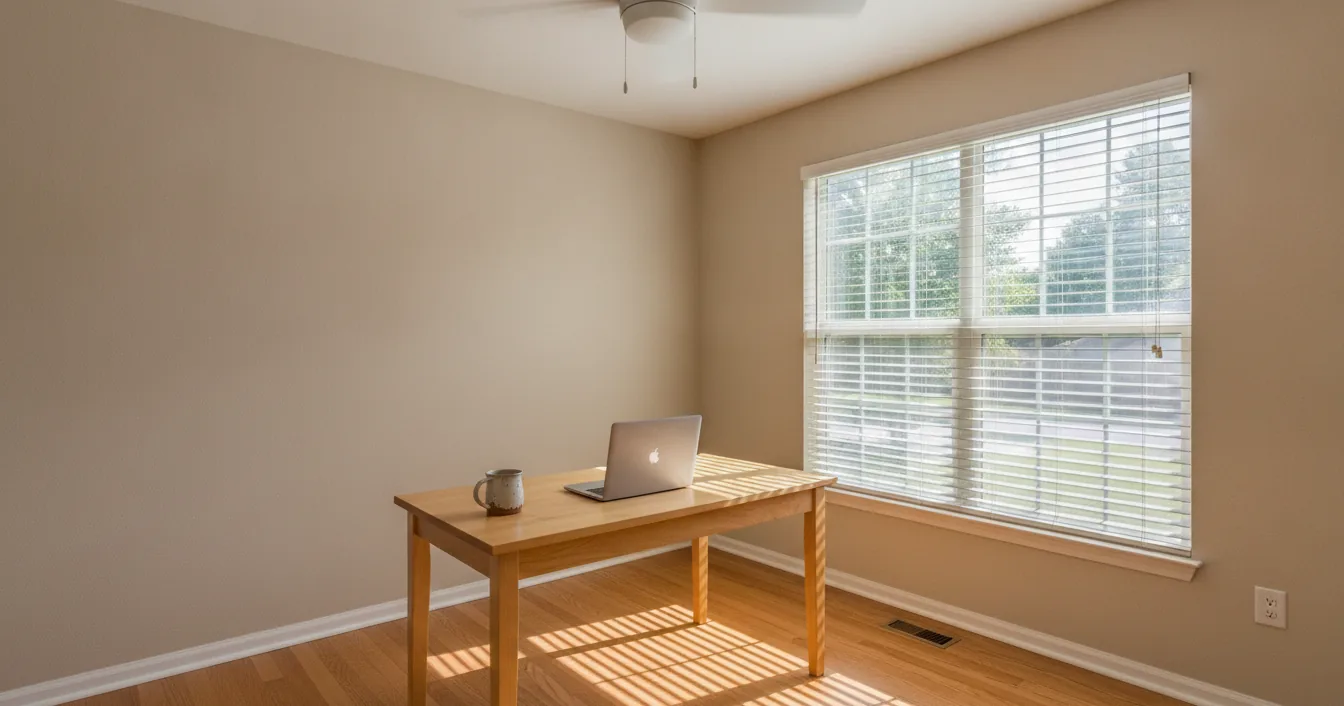
The commute disappeared, the gas money stopped, and somewhere in the middle of all that the electric bill quietly got worse. USA Today put a number on it recently after asking the HVAC technicians at ARS what they have been seeing since the country stopped driving to the office: working from home tends to add somewhere between $10 and $50 a month to a household’s energy costs, which is $120 to $600 a year depending on your climate, your rates, and what kind of equipment you own. The culprit is almost never the laptop. It is the heating and cooling system, running through the middle of the day for the first time in its life.
Here is why that happens, and what actually works to claw the money back.
The Savings Math You Lost the Day You Stopped Commuting
Every piece of thermostat advice you have ever read assumes your house empties out. The Department of Energy’s guidance is that you can save as much as 10 percent a year on heating and cooling by setting the thermostat back 7 to 10 degrees for eight hours a day. ENERGY STAR’s sample summer schedule says 78 degrees when you are home, 85 when you are not. That daytime gap is where a large share of the advertised savings lives, and it works precisely because nobody is standing in the house to complain about it.
Then you started working from home, and the eight hours that used to be free became the most expensive hours of the day. Worse, they are the hottest ones. Cooling load peaks in the afternoon, so the setback you gave up was not an average eight hours, it was the eight hours your air conditioner works hardest. That is the whole story behind the $600. Your equipment did not get less efficient and your rates are only part of it. You simply deleted the single biggest scheduled savings in the house.

The uncomfortable part is that the classic advice cannot be patched. You cannot set your house back to 85 degrees while you sit in it. The question stops being “how do I schedule a setback” and becomes “how do I stop conditioning 2,000 square feet to keep one 12 by 12 room comfortable.”
Start With the Free Moves, Not the Equipment
Before anyone quotes you for hardware, work through the cheap list. Remote workers tend to skip straight to the mini-split conversation, and a surprising number of home offices are uncomfortable for reasons that cost nothing to fix.
Close the right blinds at the right time. A west-facing office is pleasant at 9 a.m. and brutal at 3 p.m., and solar gain through glass is one of the largest loads in a small room. Closing that window’s blinds before the sun swings around, rather than after the room has already heated up, is worth more than most people expect. Leave the north-facing windows alone and keep the daylight.
Run a ceiling fan and take the setpoint back. The DOE’s rule of thumb is that a fan lets you raise the thermostat about 4 degrees with no loss in comfort, because moving air pulls heat off your skin. In a single occupied room, this is the highest-return move available. It also costs pennies to run. Just turn it off when you leave, since a fan cools people and not rooms.
Find out whether the office branch is even connected properly. Home offices are very often converted spare bedrooms at the end of a duct run, and the end of a duct run is where the design assumptions go to die. If the register barely breathes, the branch may be crushed, disconnected in the attic, or leaking most of its air into an uncooled space. Leaky ducts in older homes routinely lose 20 to 40 percent of what the system produces, and the losses concentrate at the far end. Sealing and repairing that one branch is a few hundred dollars of work that can change the room completely, and our guide to ductwork design, sealing, and sizing covers how to tell what you are dealing with.
Stop closing supply registers in the rest of the house. It feels like zoning. It is not. Closing registers on a conventional single-zone system raises static pressure, which makes the blower work harder, cuts total airflow, and on the cooling side can push the coil toward freezing. If you want real zoning, you have to buy real zoning.
Build a Schedule That Matches a Hybrid Week
A hybrid schedule is the easiest money on this list, and almost nobody sets it up. If you are in the office Tuesday, Wednesday, and Thursday, those three days should still get the full 7 to 10 degree setback. Most programmable and smart thermostats support a genuine seven-day schedule rather than the weekday and weekend split people default to, so use it. Three recovered setback days a week is a little over 40 percent of the savings you thought you had lost.
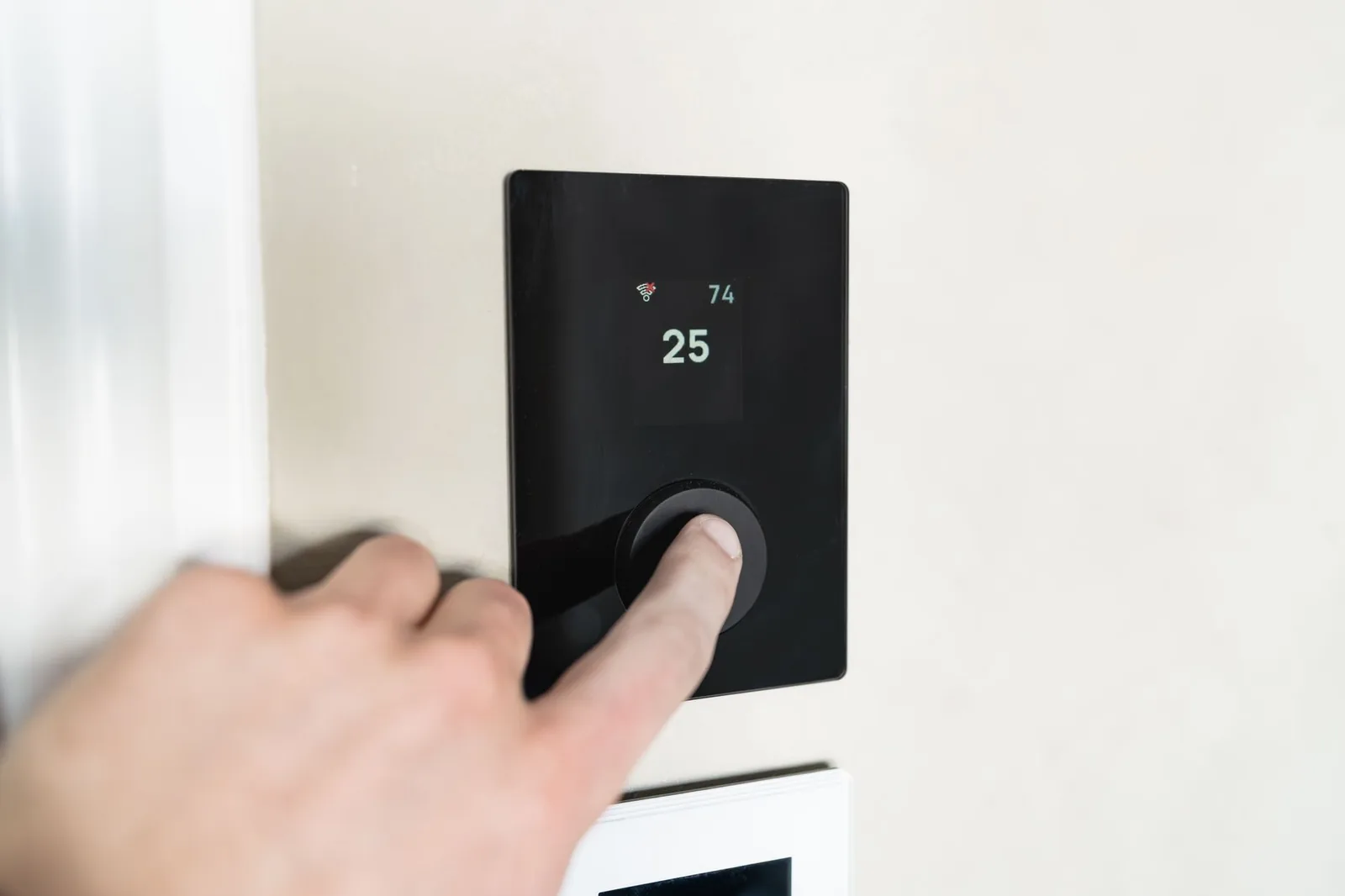
For the days you are home, the geofencing and occupancy features earn their keep in a different way. Instead of guessing, the thermostat can hold your comfortable setpoint while you are actually in the house and release it the moment you leave for a school run or an errand. Remote sensors matter even more. A thermostat in the hallway has no idea your office is 6 degrees warmer than the room it is standing in, and models that can prioritize a specific sensor during work hours let the system chase the room you occupy instead of the room the thermostat lives in. Our smart thermostat buying and setup guide walks through which models do this well and how to wire one up.
One caution: resist the urge to drop the whole-house setpoint to make one room bearable. Every degree you take off the thermostat is applied to the entire floor plan, so you pay for the whole house to fix one room. Our breakdown of the summer comfort-versus-cost sweet spot explains what each degree is really worth.
When One Room Is the Problem: Conditioning the Office Alone
If you have worked the cheap list and the office is still the reason the system runs all day, the fix is to condition that room separately and let the rest of the house drift. There are three realistic ways to do it.
A window or through-wall unit is the cheapest entry, usually a few hundred dollars for the equipment and a modest install for the through-wall version. It cools one room well, it is noisy, and it looks like what it is. For a converted bedroom you use eight hours a day, it is a perfectly rational purchase, and a modern inverter window unit is far quieter and more efficient than the box you remember from a college apartment.
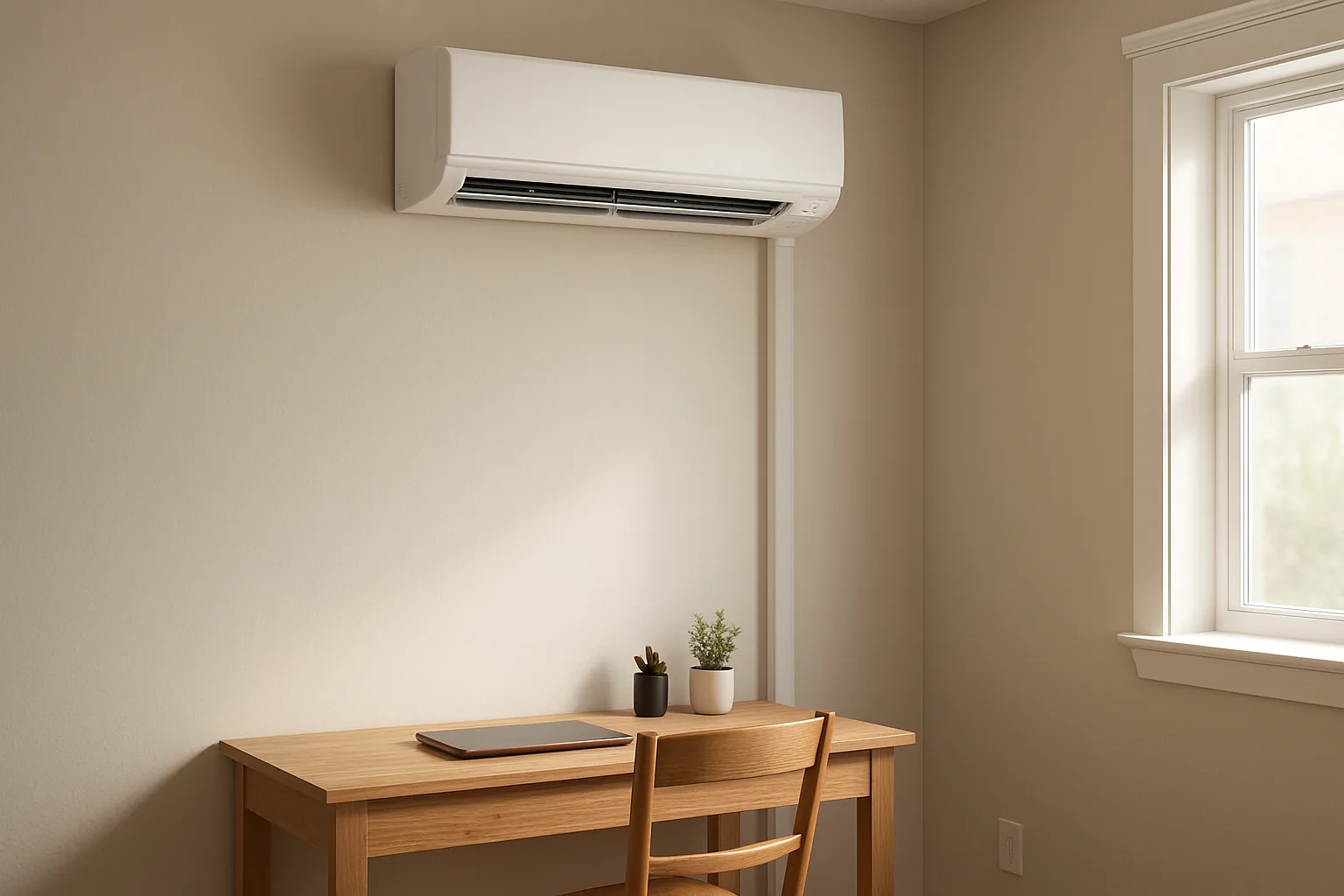
A single-zone ductless mini-split is the grown-up version. Expect roughly $3,500 to $5,500 installed for one indoor head, sized to the room. It is quiet, it is efficient, it heats as well as cools, and it runs independently of your central system. Running cost for a 12,000 BTU unit at eight hours a day lands in the neighborhood of $25 to $30 a month at national-average electricity rates near 18 cents per kilowatt hour, though heating mode runs higher than cooling.
A zoning retrofit puts motorized dampers in your existing ductwork with a control panel and separate thermostats, so the central system can serve the office alone during the day. Adding dampers to existing ducts typically runs $2,000 to $5,000, with the range widening fast if the ductwork is buried in a tight attic or was never designed for it. Zoning is the right answer when the whole house has comfort problems and the office is just the loudest one. It is the wrong answer when the office is the only room you care about, because you are paying to run the whole central system for one zone anyway.
Run the Payback Math Honestly
This is where the enthusiasm usually outruns the arithmetic. If working from home costs you an extra $600 a year at the high end, and a mini-split costs $4,500 installed, the naive payback is seven and a half years. But the honest number is longer, because the mini-split does not eliminate that $600. It replaces part of it with its own $25 to $30 a month, and it only pays off at all if you genuinely let the rest of the house drift up while you work. If you keep the central system at 74 anyway, you have added a second system and saved nothing.
So the case for spending is strongest when more than one thing is true at once: the office is chronically uncomfortable, you are home most days rather than one or two, your electricity is expensive, and the room also needs heat in winter, which is where a mini-split’s heating side quietly doubles its value. If your bill went up $15 a month and the office is merely a bit warm, buy a ceiling fan and a set of blackout blinds and stop there.
Two things do tilt the math. First, high-efficiency heat pump equipment, including ductless mini-splits, often qualifies for federal tax credits and utility rebates that can take a meaningful bite out of the install price, and it is worth confirming what applies before you sign anything. Our guide to HVAC tax credits, rebates, and financing covers what to check and the scams that have grown up around those programs. Second, get three quotes. Single-zone mini-split pricing varies more by contractor than by equipment.
The Loads Nobody Counts
Heating and cooling is the biggest change, but it is not the only one. Being home all day shifts your hot water use into daytime hours too, and water heating is typically the second-largest energy load in a house. If yours is an aging electric resistance tank, that daytime load is a good reason to look at what a heat pump water heater actually costs to run when it eventually fails.
And do not ignore the air itself. A room with a closed door, a person in it for eight hours, and a duct branch that barely delivers is a room with stale air and rising humidity. If the office feels stuffy rather than hot, the problem may be ventilation, not capacity, and no amount of extra cooling will fix it.
The short version: remote work did not break your HVAC system, it removed the one habit that was making your bill look reasonable. Get the free moves done, put a real seven-day schedule on the thermostat, and only then decide whether one room deserves its own equipment.
Further reading (sources)
- USA Today on the hidden HVAC cost of working from home
- U.S. Department of Energy for how much a scheduled thermostat setback actually saves
- U.S. Department of Energy with how home cooling systems compare, including zoning
- ENERGY STAR on what ductless heating and cooling does and where it fits
- U.S. Energy Information Administration on where residential electricity rates sit now