Geothermal Heat Pumps in 2026: Ground Loops, Real Costs, and the Lifetime Math
Published on June 29, 2026
A geothermal heat pump is the closest thing residential HVAC has to a forever system, and it is also the closest thing to a once-in-a-house decision. The equipment is expensive, the install tears up your yard for a week, and the buried loop that makes it all work is meant to outlast the mortgage. For homeowners on a larger lot who are weighing this as a permanent move, the question is not really “does geothermal work” (it works extraordinarily well) but “do the loop type, the climate, the upfront cost, and the long-run math line up for my house.” This guide walks through all four.
If you are still deciding between geothermal and an air-source unit in general, start with our broader heat pump buying guide for 2026, then come back here for the ground-source deep dive.
How a Ground Loop Pulls Heat From the Earth
Dig down a few feet anywhere in the country and the soil settles into a steady 45 to 75 degrees Fahrenheit year-round, sitting near 50 to 60 degrees across much of the United States. It does not care that it is 5 degrees out in January or 98 in August. A ground-source heat pump (GSHP) circulates fluid through a buried loop, trades heat with that stable earth, and uses a compressor to concentrate it for your home. In winter it pulls warmth out of the ground; in summer it dumps your home’s heat back into it.
That stable source is the whole advantage. An air-source unit has to wring heat out of bitterly cold winter air, which is exactly when it struggles. A ground loop always starts from a mild 50-something degrees, so a geothermal system routinely runs at a coefficient of performance (COP) of 3.5 to 5.0, meaning three and a half to five units of heat delivered per unit of electricity consumed. How well it actually performs depends on the dirt itself. Research on heat transfer in the soil around vertical loops shows that the moisture content and porosity of the ground massif materially change how fast heat moves to and from the pipe, which is why a competent installer evaluates your soil and water table rather than dropping in a generic loop.
The Three Loop Types: Horizontal, Vertical, and Pond
The loop field is where most of the cost, and most of the decision, lives. There are three closed-loop layouts plus one open-loop variant.
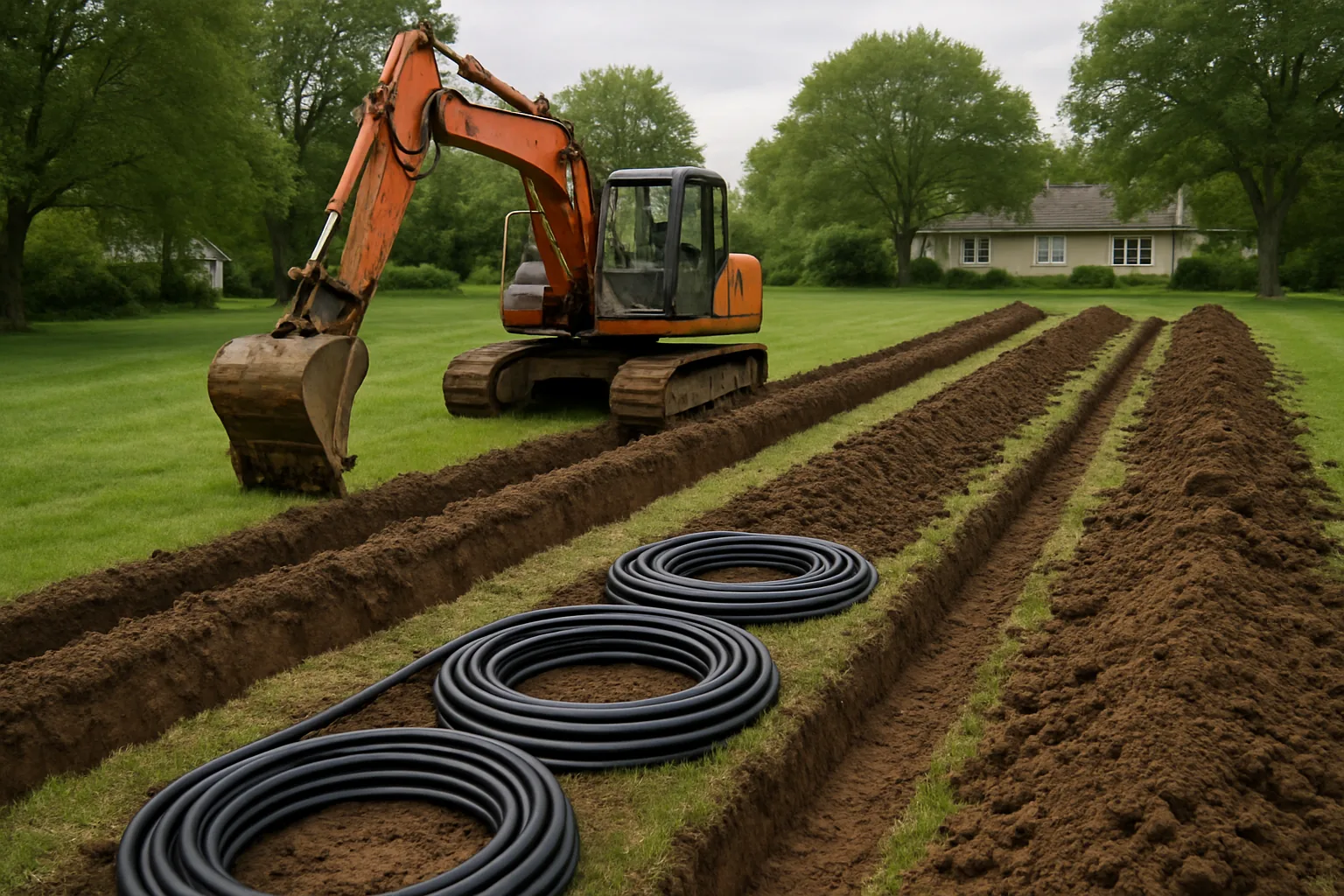
Horizontal loops are trenched into the ground 4 to 6 feet deep, often as coiled “slinky” pipe to pack more length into less trench. They are the cheapest to install because trenching is far cheaper than drilling, but they need land: figure roughly a quarter to three-quarters of an acre of diggable yard for a typical home. This is the default for rural properties and new builds with open acreage.
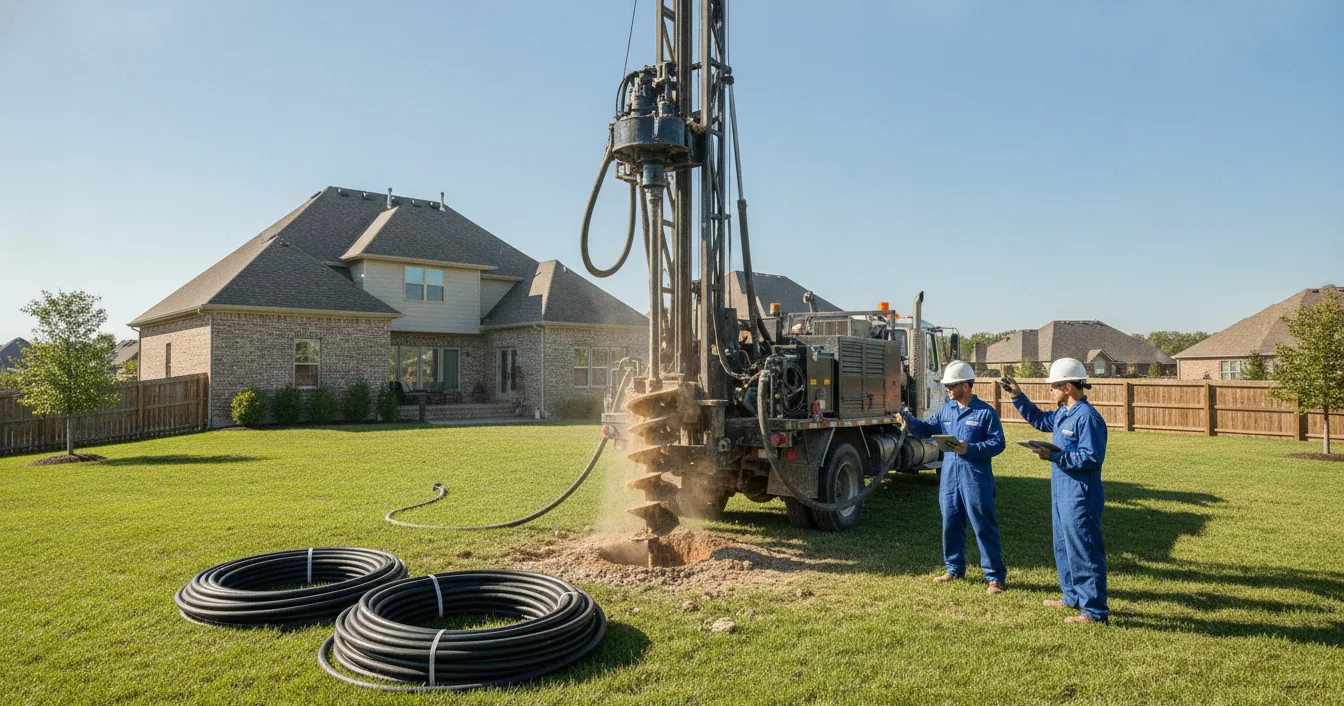
Vertical loops drop U-shaped pipe into boreholes drilled 150 to 450 feet straight down, with several bores spaced 15 to 20 feet apart. Vertical is the answer when you do not have the lot space for trenches, when the yard is already landscaped, or when shallow bedrock makes trenching impractical. It costs more because you are paying a drilling rig, but it disturbs far less surface area and taps deeper, even more stable ground.
Pond or lake loops sink coiled pipe to the bottom of a body of water on your property, generally one at least half an acre in surface area and 8 to 10 feet deep. When you have the water, this is the least expensive loop of all because there is nothing to dig.
There is also the open-loop system, which pumps actual groundwater from a well through the heat pump and discharges it. It can be very efficient where clean, plentiful groundwater exists, but it depends on water chemistry and local discharge rules, so most homeowners land on a closed loop.
Drilling and Excavation Realities
This is the part nobody warns you about. A vertical install means a drilling rig in the yard for one to several days, with the mud and spoils that come with boring hundreds of feet down. A horizontal install means an excavator cutting long open trenches across the lawn. Either way, plan for landscape restoration, reseeding, and possibly settling over the first season. You will need clear equipment access to the loop area, and you should locate any existing utilities, septic fields, and wells before anyone breaks ground. Permits for the loop field and the electrical work are typically required, and drilling in particular may trigger state well or groundwater regulations. A good contractor handles the permits and tells you up front exactly how the yard will look the week after.
Sizing by Climate
Geothermal is sized in two steps. First, a Manual J load calculation determines the heating and cooling load of the house itself, the same calculation any quality HVAC install should start with. Second, the loop field is sized to that load and to local ground conditions, because the amount of pipe you need to move a given number of BTUs changes with soil type, moisture, and your climate.
Climate matters more than people expect. A dataset modeling residential GSHP energy use across twelve U.S. cities, spanning a wide range of heating degree days and cooling degree days, shows just how differently a 2-ton, 3-ton, or 4-ton geothermal system performs in a Minnesota winter versus a Texas summer. The takeaway for homeowners: a loop sized correctly for a cooling-dominated southern climate is not the same loop a heating-dominated northern climate needs, and an undersized loop quietly drags down efficiency for the life of the system. Insist that the contractor show their loop-sizing work, not just the equipment tonnage.
What Geothermal Costs in 2026 and the 25D Question
A residential geothermal system in 2026 typically runs $20,000 to $45,000 installed, with horizontal loops at the lower end and deep vertical boreholes at the top. The loop field and drilling are what separate that price from a comparable air-source install. For the line items that make up any HVAC quote, our full price breakdown by system type is the companion piece to this section.
Now the credit question, and it matters enormously for geothermal. For years the federal Section 25D Residential Clean Energy Credit covered 30 percent of a qualifying geothermal install with no dollar cap, while air-source heat pumps fell under Section 25C and its $2,000 annual ceiling. On a $35,000 geothermal project, an uncapped 30 percent credit was worth more than $10,000, and that gap is the single biggest reason geothermal economics ever penciled out against cheaper equipment. Here is the catch for 2026: the 2025 federal budget law moved up the expiration of both 25C and 25D, ending them for systems placed in service after December 31, 2025. That means the generous uncapped credit many older guides still describe may no longer be available for a new 2026 install. Do not bank a five-figure decision on it. Verify current federal eligibility with a tax professional, and check what state, utility, and (for some projects) commercial incentives still apply. Our 2026 guide to HVAC money, rebates, and rebate scams tracks the moving pieces.
The Lifetime Math: Payback vs Air-Source and Gas
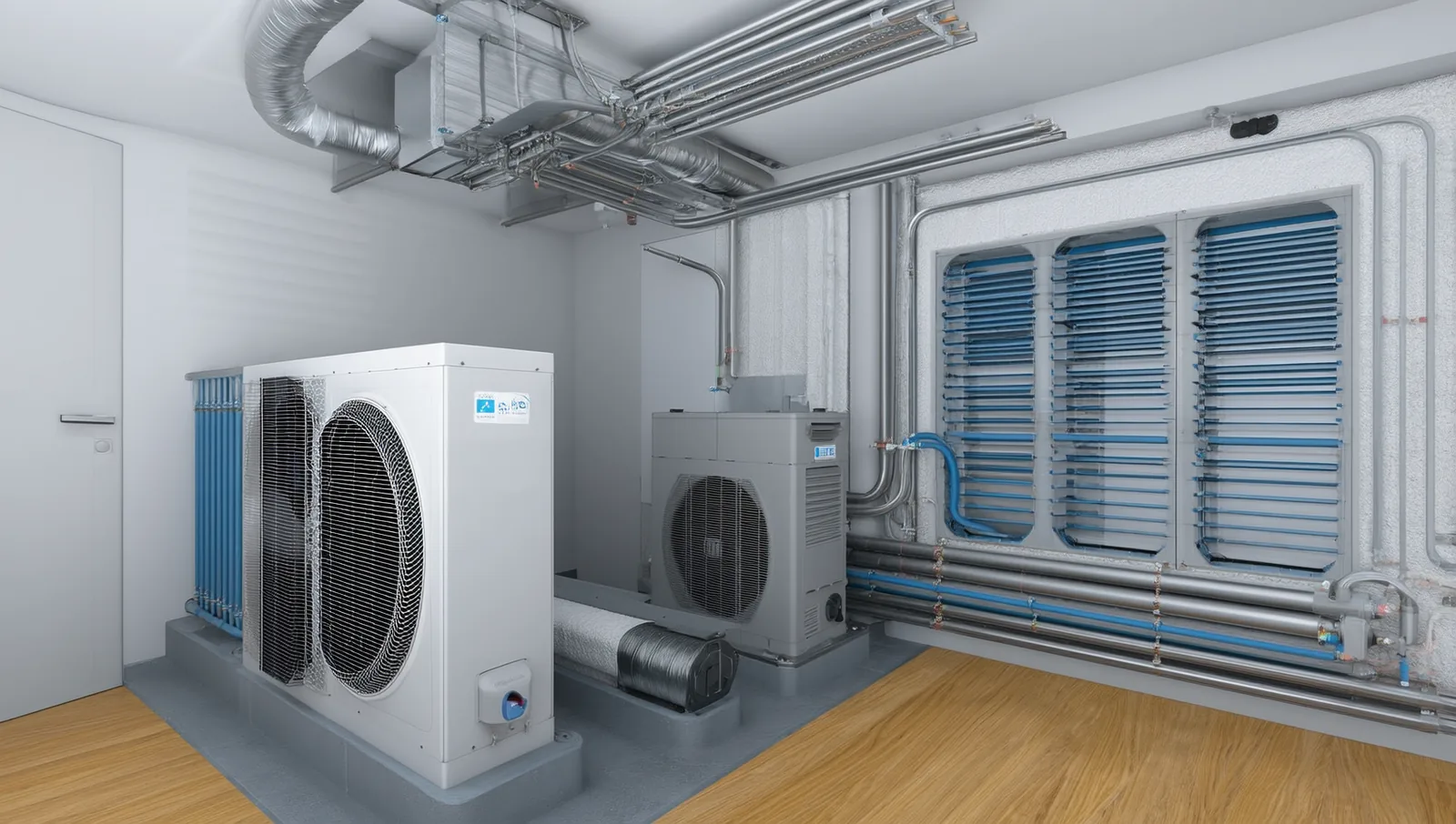
Geothermal’s case has always rested on the long run, not the sticker. The indoor heat pump unit lives in a basement or mechanical room and never battles weather, so it commonly lasts 20 to 25 years, against roughly 15 for an outdoor air-source compressor. The buried loop is the real headline: high-density polyethylene loop pipe is routinely warrantied for 50 years and can outlast several generations of indoor equipment. So when you replace the heat pump in year 22, you reuse the loop you already paid for.
On operating cost, a geothermal system usually beats both an air-source heat pump and a gas furnace, often cutting heating and cooling energy use by 30 to 60 percent versus conventional equipment. The payback period is where honesty matters. With a large incentive in play, geothermal could pay back its premium over air-source in well under a decade. Without that 30 percent credit, the upfront gap is larger and simple payback can stretch to 10 to 15 years or more, which only makes sense if you genuinely plan to stay in the house. Run the numbers for your own utility rates and your own time horizon. Geothermal rewards the homeowner who is not moving; it punishes the one who sells in five years. Whatever you install, the long-term economics hinge on installation quality and upkeep.
CO2 Refrigerant: The Next Generation
One emerging design worth knowing about uses carbon dioxide (R-744) as the refrigerant instead of the synthetic R-410A in most units today. CO2 has zero ozone depletion potential and a global warming potential of essentially 1, against the high GWP of conventional refrigerants now being phased down. A modeled and lab-tested prototype CO2 ground-source heat pump ran in both subcritical and transcritical modes (CO2’s critical temperature is about 31 degrees Celsius, so it crosses that line in normal operation) and posted a cooling COP of 4.14 at the standard rating condition, against 4.43 for a comparable R-410A unit, with the CO2 system actually pulling ahead at lower entering-liquid temperatures. The short version: CO2 GSHPs are still largely experimental and not yet a mainstream homeowner option, but they point to a future where geothermal is both highly efficient and free of high-GWP refrigerants. It is a technology to watch, not one to wait for.
Is Geothermal Right for Your Home?

Geothermal makes the most sense if you have the lot for a horizontal loop (or the budget for vertical drilling), you live somewhere with real heating and cooling demand, and you plan to stay long enough to collect the savings. It makes less sense on a tiny lot with no drilling access, or for a homeowner likely to move within a few years. Get at least three written quotes, ask each contractor to show both the Manual J and the loop-sizing math, confirm the loop pipe’s warranty in writing, and pin down the current federal and local incentives before you sign. Done right, a geothermal system is the last heating and cooling decision you make for that house.
Further reading (sources)
- U.S. Department of Energy on how geothermal heat pump loop fields actually work
- Data in Brief for a climate-by-climate dataset of residential GSHP energy use across U.S. cities
- Energy Conversion and Management with modeling and experiments on a CO2 ground-source heat pump
- Materials covering how heat transfer behaves in the soil around a vertical ground loop
- ENERGY STAR on what makes a geothermal heat pump qualify