Heat Pump Water Heaters in 2026: Sizing, Costs, and Why Hot Water Gets Two to Four Times Cheaper
Published on August 3, 2026

Nobody shops for a water heater. You inherit one, ignore it for a decade, and then one morning there is a puddle around the base and suddenly you are making a $3,000 decision in an afternoon. That rush is exactly how most households end up replacing like with like, and it is why so many homes still heat water the most expensive way available.
A heat pump water heater (HPWH) is the one appliance swap that reliably cuts a line item on the utility bill by half or better. Water heating runs somewhere around a fifth of a typical home’s energy use, so the difference is real money every month for the next 12 years. This guide covers what the ratings actually mean, how to size one, where it can and cannot go, what it costs in 2026, and how the incentive picture changed this year.
How a Heat Pump Water Heater Actually Works
A conventional electric tank makes heat. Two resistance elements sit in the water and convert electricity into warmth at close to a one-to-one ratio, which is the physical ceiling for that approach.
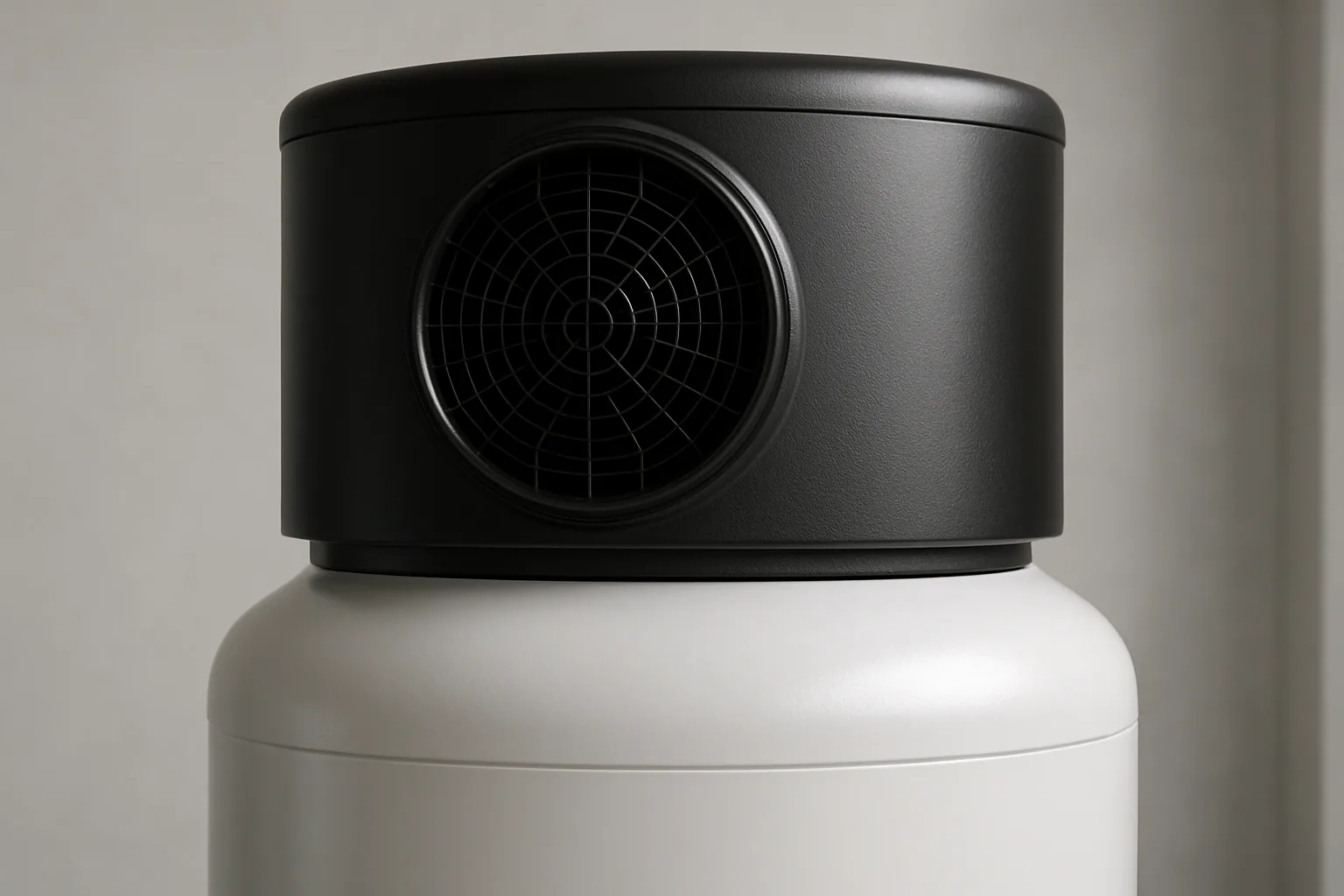
A heat pump water heater does not make heat. It moves it. The module sitting on top of the tank is a small refrigeration circuit: a fan pulls room air across an evaporator coil, the refrigerant absorbs heat from that air, a compressor squeezes it to a much higher temperature, and a condenser coil wrapped around the tank hands that heat off to the water. Cooler, drier air gets blown back into the room. Because the electricity is only running a compressor and a fan rather than doing the heating itself, you get several units of heat out for every unit of electricity in. It is the same physics as the air-source heat pump that heats and cools your living space, pointed at a tank of water instead of your ductwork.
Every model on the market also keeps resistance elements inside the tank as backup. That is why they are sold as “hybrid” water heaters, and it matters more than most buyers realize.
Reading the UEF Rating, and Why the Real-World Number Is Lower
The rating to compare is Uniform Energy Factor (UEF), the Department of Energy’s standard since 2017. It measures how much of the energy going in ends up as usable hot water across a simulated 24-hour draw cycle. Roughly where the categories land:
- Gas storage tank: 0.58 to 0.70 (condensing models reach about 0.80)
- Electric resistance tank: 0.90 to 0.95
- Gas tankless: 0.80 to 0.95
- Heat pump water heater: 3.0 to 4.0 and up
One catch on comparison shopping: UEF is only apples to apples within the same draw pattern. Units are tested at very small, low, medium, or high draw, and a 50-gallon tank rated on the medium pattern cannot be directly compared to an 80-gallon rated on high. Check that the label on both units says the same pattern.
Now the part the marketing leaves out. Rated UEF is a laboratory number, and installed performance is lower. A study in Energy and Buildings modeled water heating for an all-electric single family house in a mixed-humid climate, validating the model against a full year of field data. Over a year, the heat pump water heater delivered a system coefficient of performance of 1.9, against 0.95 for the baseline resistance heater. Exactly double, not the three-and-a-half-fold advantage the sticker implies.
The same study made a second point worth internalizing. A HPWH harvests heat from the room it sits in, so during the heating season your furnace or heat pump has to replace that heat, which claws back some of the savings. Pairing the unit with a solar thermal preheat tank was the most efficient setup they tested at a system COP of 2.87, and it stayed the winner even after that space-conditioning penalty was charged against it.
So the honest headline is this: a heat pump water heater runs two to four times cheaper than electric resistance, near the low end of that range in a conditioned basement in a cold winter and near the high end in a garage in a warm climate where the waste cooling is a bonus rather than a cost.
Sizing: First-Hour Rating Beats Gallons
Tank capacity is the number on the box, but first-hour rating (FHR) is the number that decides whether anyone gets a cold shower. FHR is how many gallons of hot water the unit can deliver in one busy hour starting from a fully heated tank, and it appears on the yellow EnergyGuide label.
Add up your worst hour: figure 10 to 20 gallons per shower, about 20 for a bath, 6 for a dishwasher, 7 to 15 for a hot clothes washer cycle, and 2 to 4 for sinks and shaving. Match the FHR to that total.
Here is the HPWH-specific wrinkle. Running on the compressor alone, a heat pump recovers far more slowly than resistance elements do, so it leans harder on stored volume to get through a busy stretch. Standard advice is to buy one size up from the resistance tank you would otherwise have chosen: 50 gallons for two or three people, 65 or 66 for three or four, 80 for four or more with overlapping showers. Undersize it and the unit compensates by firing the backup elements constantly, which quietly converts your efficient water heater back into an expensive one.

The Operating Modes, and Which One to Actually Use
Every hybrid unit ships with a mode selector, and this single setting explains most of the gap between the savings people expect and the savings they get.
- Heat pump only (sometimes labeled efficiency or eco): compressor exclusively, elements locked out. Cheapest to run, slowest to recover.
- Hybrid or auto: heat pump leads, elements assist on heavy draws. The usual factory default.
- Electric or high demand: resistance elements do the work. This is a standard electric water heater with an expensive compressor sitting on top, doing nothing.
- Vacation or away: holds a low setpoint and reheats before you return.
If you sized the tank correctly, run it in heat pump only mode and see whether anyone notices. Most households do not. Hybrid is a reasonable default if your demand is spiky. What you want to avoid is calling a year later to ask why the bill never dropped and discovering the installer left it in electric mode.
Where It Goes: Air Volume, Ducting, and Ambient Temperature
A heat pump water heater needs a supply of air to strip heat from, which is the constraint that rules out a lot of otherwise convenient spots. Manufacturers typically require roughly 700 to 1,000 cubic feet of free air space, about a 10 by 12 foot room with an 8 foot ceiling. Drop one in a sealed closet and it will starve, chill the closet down, and run on the elements.
Ambient temperature matters just as much. Most units run the compressor between roughly 40 and 120 degrees Fahrenheit and fall back to resistance outside that band. An unheated garage in Minnesota therefore loses the heat pump precisely when hot water demand peaks, while the same garage in Phoenix is close to ideal. Basements are the sweet spot in most of the country: stable temperature, plenty of air volume, and a floor drain already nearby.
If the space is tight, ducting kits let you pull intake air from an adjacent room, exhaust the cold air somewhere useful, or both. Ducts add static pressure, so respect the manufacturer’s maximum equivalent length and use smooth rigid duct rather than long runs of flex. The same rules that govern good duct design everywhere else in the house apply to a six foot run feeding a water heater.
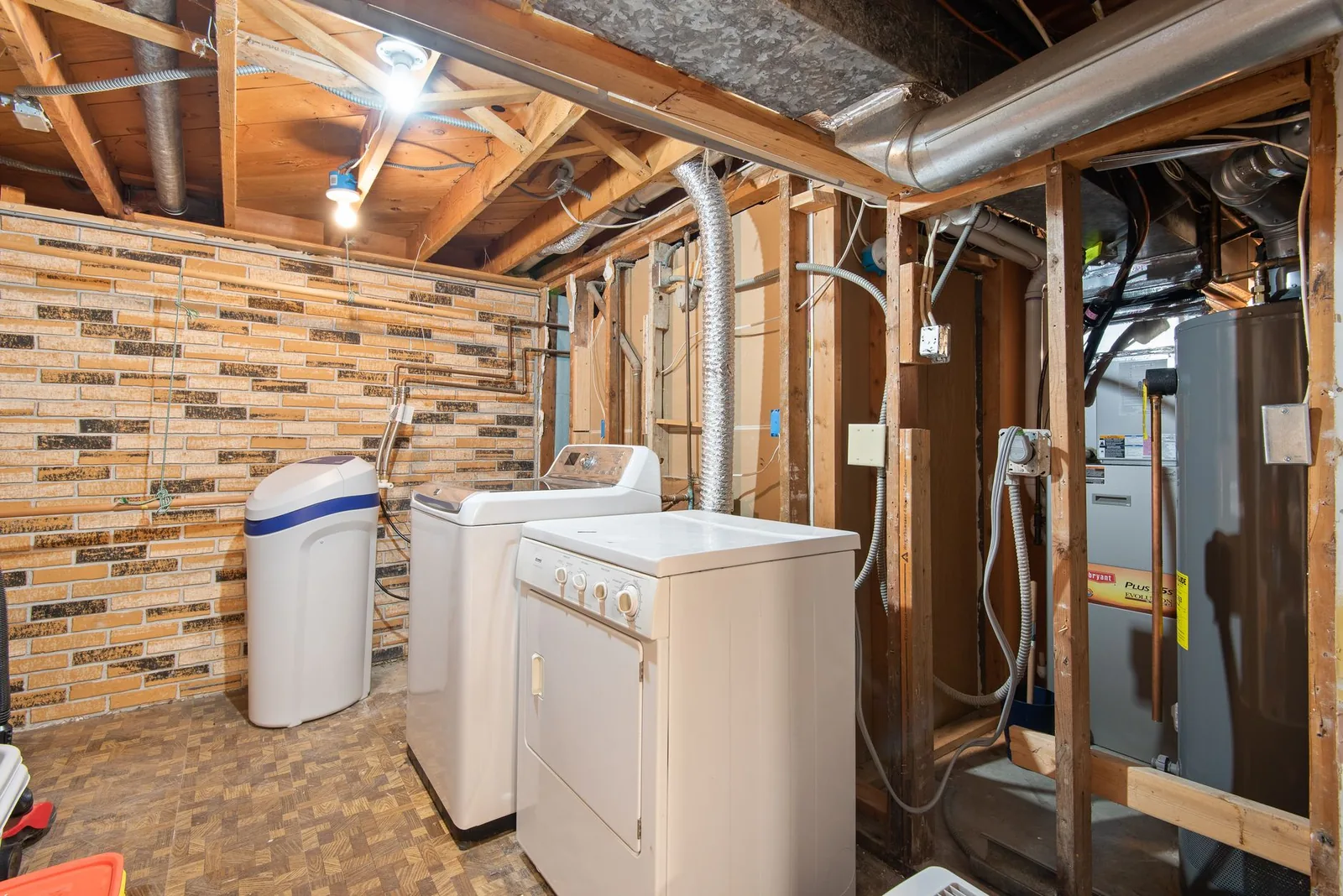
Two checks before you order: HPWHs are taller than the tank they replace (a 50-gallon unit often stands over five feet) and need clearance above for filter and service access. Measure the ceiling, the stairwell, and the doorway.
Noise, Condensate, and the Cold Corner
Three side effects catch people off guard.
Noise. The compressor and fan run around 45 to 55 decibels, comparable to a dishwasher. That is unobjectionable in an unfinished basement and genuinely annoying through the wall of a bedroom or directly beneath one. Place it accordingly.
Condensate. Pulling heat out of the air also pulls moisture out of it, potentially several gallons a day in a humid basement. It needs a gravity drain line or a condensate pump. This is the install detail most often skipped, and it is how a tidy basement becomes a wet one. The flip side is that a HPWH is a free dehumidifier for a damp basement, which may let you unplug a standalone unit and is one more input into the overall air quality of the house.
The cold corner. The exhaust air comes out several degrees cooler than it went in. In a basement or garage in July that is a small gift. In conditioned space in January it is a cost, which is the space-conditioning penalty the research quantified.
What It Costs in 2026, and What Changed With the Tax Credits
Equipment runs about $1,500 to $3,500 depending on capacity and brand tier. Installed prices in 2026 look roughly like this:
- Straight swap for an existing electric tank: $2,500 to $4,500
- Converting from gas: $4,000 to $7,000 and up, because you are adding a dedicated 240 volt circuit, possibly upgrading the panel, and capping the gas line and abandoning the flue
- For reference, a plain electric tank runs $1,200 to $2,200 installed and a gas tank $1,500 to $2,800
If the panel work is the dealbreaker, look at the 120 volt plug-in models that have arrived in the last few years. They cost a bit more up front and recover more slowly, but they run on an ordinary outlet, which can save four figures on a gas-to-electric conversion. For how these line items behave across a broader project, our full price breakdown by system type is the companion piece.
Now the incentives, and read this part carefully because most guides still online are out of date. Section 25C historically covered 30 percent of a qualifying heat pump water heater up to $2,000. The 2025 federal budget law moved up the expiration of 25C and 25D to property placed in service after December 31, 2025, so that credit may simply not be available for a 2026 install. Do not let a salesperson net it out of your quote. Confirm current eligibility with a tax professional first.
The rebate side is a separate program and a separate pot of money. HEEHRA pays up to $1,750 toward a heat pump water heater at the point of sale, administered by your state energy office and tied to household income (full coverage up to the caps below 80 percent of area median income, half between 80 and 150 percent). Many utilities run their own HPWH rebates in the $300 to $1,000 range too, sometimes with a bonus for enrolling in a demand response program. Check DSIRE at dsireusa.org and your utility directly, and see our 2026 guide to HVAC money and rebate scams for how to verify any offer before you sign.
Running the Numbers on Your Own House
The arithmetic fits on the back of your utility bill. A family of four typically burns 3,500 to 4,500 kilowatt hours a year heating water with resistance elements, which at around 17 cents per kilowatt hour is roughly $600 to $765. Cut that by a real-world factor of two to two and a half and you land near $250 to $380, a saving of $300 to $400 a year.
Against a resistance tank the incremental cost is maybe $1,500, so it pays back in four or five years and keeps paying for the rest of the unit’s life. Against a gas tank the answer depends entirely on your local ratio of gas price to electricity price, and in a few markets with very cheap gas and very expensive power a HPWH will not win on operating cost at all. Run it with your own numbers rather than a national average.
Heat Pump vs Tankless vs Gas
Gas tankless gives you endless hot water in a small wall-mounted box, but at a UEF of 0.80 to 0.95 it is efficient at burning gas rather than efficient in absolute terms, and installation often means new venting and a larger gas line. Electric tankless draws staggering amperage, frequently 100 amps or more for a whole house, and is rarely a sensible retrofit. Gas storage stays the cheapest to install and can still be cheapest to run where gas is unusually cheap. Heat pump wins on energy per gallon nearly everywhere else, and its costs are space, noise, condensate, and slower recovery rather than dollars.
Is It the Right Call for Your House?
Say yes if you have a basement or a temperate garage with room to breathe, a floor drain or a spot for a condensate pump, an existing 240 volt circuit or an easy path to one, and a water heater old enough that you are choosing rather than reacting. Say no, or at least think harder, if the only location is a sealed closet next to a bedroom, your garage freezes solid every winter, or your gas is cheap enough to change the math.
The best time to decide is about a year before you have to. Go look at the date sticker on your current tank. If it is past ten years, get two or three quotes while you still have the luxury of comparing them, confirm the first-hour rating on paper, ask specifically how the installer plans to handle condensate, and check what your state and utility are paying this quarter. The households that get the full benefit from a heat pump water heater are almost always the ones who were not standing in a puddle when they chose it.
Further reading (sources)
- Energy and Buildings on a field-validated look at efficient water heating options for an all-electric home
- U.S. Department of Energy for how heat pump water heaters work and where they can be installed
- ENERGY STAR with the qualifying criteria and rebate finder for water heaters
- DSIRE covering state, local, and utility incentives searchable by zip code
- U.S. Department of Energy on sizing a new water heater by first-hour rating