AC Running but Not Cooling the House? A Homeowner's Diagnostic Walkthrough
Published on June 16, 2026

It is the middle of a heat wave, the air conditioner is humming along like it always does, and yet the house keeps creeping toward uncomfortable. The system is clearly running, the electric bill is climbing, but the air drifting out of the vents is barely cool. It is one of the most common calls technicians field every summer, and the frustrating part is that the cause might be a five-minute fix you can handle in your socks, or it might be a sealed-system repair that legally requires a certified technician. The trick is knowing which is which before you spend a dime. This walkthrough goes in the order a good tech would work the problem: the safe, free checks first, then the in-between issues, then the point where the smartest move is to shut the system off and pick up the phone.
First, Know Your System
Before you diagnose anything, find two numbers, because they change every decision below: how old your AC is, and what type it is. The age is printed on the data plate on the outdoor unit (or you can read it from the serial number). A central system lasts roughly 12 to 17 years, so a unit past a dozen summers is a different conversation than a three-year-old one. Type matters too: a central split system, a heat pump running in cooling mode, and a ductless mini-split fail in slightly different ways. Knowing what you have keeps you from chasing the wrong fix.
It also helps to be specific about the symptom. “Not cooling” can mean three different things: the vents are blowing genuinely warm air, the air is cool but weak, or the system runs nonstop and never quite reaches the setpoint. A quick check tells you a lot. Hold a thermometer at a supply vent, then at a return grille. A healthy system pulls the supply air about 15 to 20 degrees colder than the return. Much less than that, and something on this list is the culprit.
The DIY-Safe Checks (Start Here)
These five checks are free, safe, and solve a surprising share of “no cool air” calls. Work through them in order before you call anyone.
The thermostat. It sounds too simple, but start here every time. Confirm it is set to “cool” and not “heat” or “fan only,” and that the setpoint is actually below room temperature. Set the fan to “auto” rather than “on,” because “on” runs the blower continuously and pushes uncooled air between cycles, which feels exactly like a system that stopped cooling. If it takes batteries, swap them. If it is a smart thermostat, they can glitch like any other connected device: check that it is online, that the app is updated, and reboot it if the screen is unresponsive.
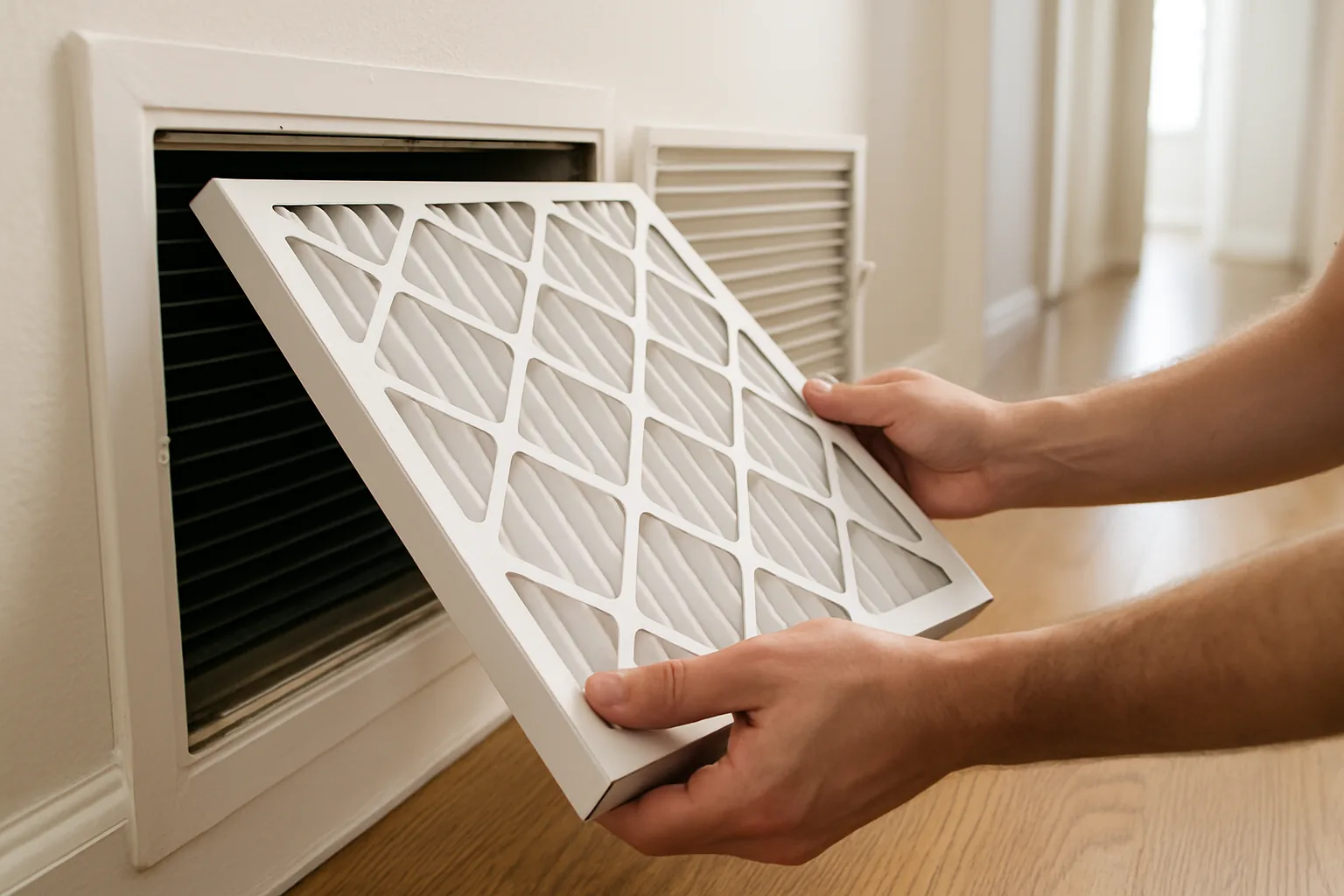
The air filter. A clogged filter is the single most common cause of weak cooling, and the easiest to fix. When dust packs the filter, airflow across the coils collapses, and the whole system chokes. Pull the filter and hold it to a light. If you cannot see through it, replace it. Most one-inch pleated filters need changing every one to three months in cooling season, sooner with pets or allergies. A fresh filter alone can revive a system that felt like it had given up.
The breaker and power. A central AC runs on two circuits, an indoor one for the air handler and a 240-volt one for the outdoor unit. If the outdoor unit is dead silent while the indoor fan blows, check the panel for a tripped breaker, and look for a separate disconnect box near the outdoor unit. Reset a tripped breaker once. If it trips again immediately, stop. A breaker that keeps tripping is protecting you from an electrical fault, and that is a pro’s job.
The outdoor condenser unit. That big box outside dumps your home’s heat into the air, and it cannot do that if it is smothered. Tall grass, leaves, cottonwood fluff, or a row of shrubs crowding the cabinet all trap heat and kill efficiency. Switch the system off, clear at least two feet of space on every side, and gently rinse the fins with a garden hose from the inside out. A unit that feels blazing hot to stand near is often just buffaloed by debris.
Closed or blocked vents. Walk the house and open every supply register, then make sure furniture, rugs, or curtains are not sitting on top of them. The old advice to close vents in unused rooms usually backfires: choking off too many registers raises pressure in the ducts, weakens airflow everywhere, and can even help freeze the indoor coil. Open them up.
Frozen Evaporator Coil: The In-Between Problem
If you find a sheet of ice on the indoor coil or the copper line running to it, or a puddle of water once things thaw, you have a frozen evaporator coil. It is the great paradox of summer AC: the system ices over and then blows warm. The coil gets so cold that moisture freezes on it, and a block of ice cannot absorb heat from your air.
Part of the fix is yours to do. Turn the cooling off but set the fan to “on” to melt the ice faster, and give it a few hours (a heavy freeze can take most of a day). While it thaws, replace a dirty filter and open those vents, because restricted airflow is the most common trigger. Once everything is dry, run it again and watch.
Here is the important line: if the coil freezes again, stop treating the symptom. Repeated icing usually points to low refrigerant or a deeper airflow problem, and chipping at ice or rerunning a frozen system can crack the coil or damage the compressor. One thaw-and-reset is reasonable. A second freeze is a flag to call a pro.
The Pro-Only Causes (Stop and Call)
If you have worked through the checks above and the house is still warm, the remaining suspects all live inside the sealed system or the electrical guts of the unit. These are not DIY territory.

Low refrigerant. Refrigerant is the fluid that actually carries heat out of your home, and it does not get “used up.” If the level is low, there is a leak, full stop. Warning signs are ice on the lines, warm air at the vents, and a hissing or bubbling sound near the unit. This is the clearest stop-and-call case on the list, because refrigerant is not just hard to handle, it is regulated: under the Clean Air Act, anyone who buys or handles it must hold an EPA Section 608 certification. “Topping it off” without finding the leak is a band-aid that wastes your money and vents a potent greenhouse gas. A proper repair finds the leak, fixes it, and recharges to spec.
A failed capacitor. The capacitor is a small cylinder that gives the motors the jolt they need to start and keep spinning. It is one of the most common failures techs see, and a hot summer is brutal on them. Tell-tale signs are a humming outdoor unit whose fan will not start, a clicking sound, or a fan you can nudge into motion with a stick (do not do this with the power on). A capacitor stores a dangerous charge even after the power is off, so this is a quick, inexpensive repair for a technician and a genuine shock hazard for everyone else.
Compressor trouble. The compressor is the heart of the system and the most expensive part to replace. Hard starts, frequent breaker trips, loud knocking, or a unit that runs but never cools can all point to a failing compressor. On an older system, a dead compressor often tips the decision toward replacement rather than repair.
Leaky or disconnected ducts. If cooled air escapes into your attic or crawlspace through gaps in the ductwork, the rooms stay warm even when the equipment is working fine. Sealing accessible duct joints is a reasonable DIY job, but tracking down hidden leaks and balancing the system is usually work for a pro.
Call Right Away If You Notice These
Some symptoms mean shut it down now rather than keep troubleshooting: a burning or hot-plastic smell, scorch marks or sparking at the disconnect or panel, a breaker that trips the moment you reset it, water pooling near electrical components, or coils that freeze over and over. Electrical faults and a struggling compressor can turn into bigger and more dangerous failures fast, and a same-day service call beats a ruined system.
Repair or Replace?
Once a technician has named the problem, you face the real question. A handful of repairs, like a capacitor on a young unit, are easy yeses. The math gets harder when the system is old or the fix is costly. A useful rule of thumb is to multiply the repair cost by the age of the system: if the result clears about 5,000, replacement is usually the wiser spend. A 700-dollar repair on a 15-year-old unit (700 times 15 is 10,500) is money poured into a system near the end of its life, while the same repair on a 5-year-old one is worth it.
If your house is never quite comfortable, or you are calling for repairs every summer, the unit may simply be too old or wrong-sized for your home. Before you commit either way, it helps to know what the diagnosis should cost, and our guide to what HVAC service calls actually run lays out fair ranges. If replacement is on the table, our 2026 central air conditioner buying guide walks through sizing and efficiency, and there are real federal tax credits and utility rebates that can take a meaningful bite out of the price.
Prevent the Next Heat-Wave Scramble
Most no-cool emergencies are preventable. Change the filter on schedule, keep the outdoor unit clear, and book a professional tune-up each spring so a tech can check the refrigerant charge, clean the coils, and catch a tired capacitor before July does. The same habit that keeps your heating reliable applies here: our piece on regular system inspections and maintenance covers the routine that keeps both sides of your HVAC honest.
The Bottom Line
When the AC runs but the house stays warm, start with the free checks: thermostat, filter, breaker, condenser, and vents, in that order. Treat a single frozen coil with a thaw and a fresh filter, but read a second freeze as a signal to call. Anything involving refrigerant, the capacitor, or the compressor belongs to a licensed technician, and refrigerant work legally requires EPA Section 608 certification, so it is never a DIY fix. Know your system’s age, match the repair against its remaining life, and you will spend the heat wave cool instead of guessing.
Further reading (sources)
- Money on why an air conditioner can run without cooling the house
- U.S. Department of Energy for keeping a central air conditioner maintained and efficient
- U.S. EPA with the rules on who can legally handle refrigerant
- ENERGY STAR covering routine heating and cooling maintenance for homeowners