What a New HVAC System Really Costs in 2026: A Full Price Breakdown by System Type
Published on June 19, 2026

Replacing a heating and cooling system is one of the largest single expenses a homeowner faces, and 2026 is a confusing year to price one. Three licensed contractors can walk the same house and hand you bids that differ by ten thousand dollars, all of them honestly quoted. The spread is not usually fraud. It comes from different equipment tiers, different sizing math, and different assumptions about what hides behind your walls. Nationwide, homeowners are spending anywhere from about $5,000 to $28,000 on a full replacement this year, equipment and labor included. This guide breaks down where in that range your project should land, what each line item on the quote actually pays for, and why the number swings by thousands from one street to the next.
What “A New HVAC System” Actually Includes
Before comparing prices, get clear on scope, because “new HVAC system” means different things to different contractors. At the small end, it is a single piece of equipment swapped onto existing, healthy infrastructure: a new condenser on a good coil, or a furnace into existing ductwork. At the large end it is a whole-home overhaul, new heating and cooling equipment, a new air handler or coil, duct repairs, an electrical upgrade, a thermostat, and a permit.
For a basic central air conditioner and gas furnace replacement in an average 2,000 square foot home with ductwork already in good shape, most homeowners land somewhere in the $7,000 to $20,000 range. Higher-efficiency equipment, a larger house, or any complication behind the walls pushes you up from there. The job is rarely just the box on the pad, and the difference between a $9,000 quote and a $19,000 quote is usually everything around the box, not the box itself.
Installed Price by System Type
System type is the single biggest lever on the total. Here is what a complete, professionally installed system typically runs in 2026, including equipment and labor for an average-sized home. Larger homes, premium tiers, and difficult installs sit at the top of each range or above it.
- Gas furnace plus central AC (split system): roughly $8,000 to $20,000. The classic pairing. A single-stage builder-grade setup sits near the bottom; a high-efficiency, variable-speed system in a bigger house reaches the top.
- Air-source heat pump (whole-home, ducted): roughly $8,000 to $22,000. One system that both heats and cools, so it replaces the furnace and AC together. Cold-climate and variable-speed models cost more upfront but carry the richest federal tax credits.
- Ductless mini-split: roughly $3,500 to $6,000 for a single zone, and $9,000 to $18,000 or more for a multi-zone array of three to five indoor heads. The right answer for homes with no ductwork, additions, or room-by-room control.
- Dual-fuel (hybrid) system: roughly $10,000 to $25,000. A heat pump paired with a gas furnace that takes over in deep cold. You pay for two heat sources, but you get the efficiency of a heat pump most of the year and gas-grade heat on the coldest nights.
- Geothermal (ground-source) heat pump: roughly $20,000 to $45,000. The highest upfront cost by far, driven by drilling or excavating the ground loop, but the lowest operating cost and a 30 percent federal credit with no dollar cap that takes a large bite out of the sticker.
If your heating is failing alongside your AC, price a heat pump before you reflexively buy a furnace and condenser, because the heating-side incentives are far larger. Our heat pump buying guide walks through the types and sizing, and the central air conditioner buying guide covers the AC side, including the refrigerant change that affects every system on this list.
Reading a Quote Line by Line
A bottom-line number tells you almost nothing. A fair quote itemizes the work, and once you can read the line items you can compare three bids honestly. Here is where the money goes.
Equipment. The furnace, condenser, coil, or heat pump itself, usually 40 to 60 percent of the total. Tier matters: a single-stage compressor is cheapest, two-stage adds comfort and a few thousand dollars, and a variable-speed inverter system tops the range while delivering the quietest, most even operation.
Labor. Often 30 to 50 percent of the bill, and rising. A skilled-technician shortage has pushed installation pricing up across much of the country, and a good crew that charges more for a careful job is worth it, because installation quality drives performance more than the brand on the cabinet.
Permits and inspection. Most jurisdictions require a permit for equipment replacement, typically $250 to $1,500 depending on where you live. A contractor who skips the permit to shave the price is a red flag, not a bargain, since unpermitted work can haunt a future home sale.
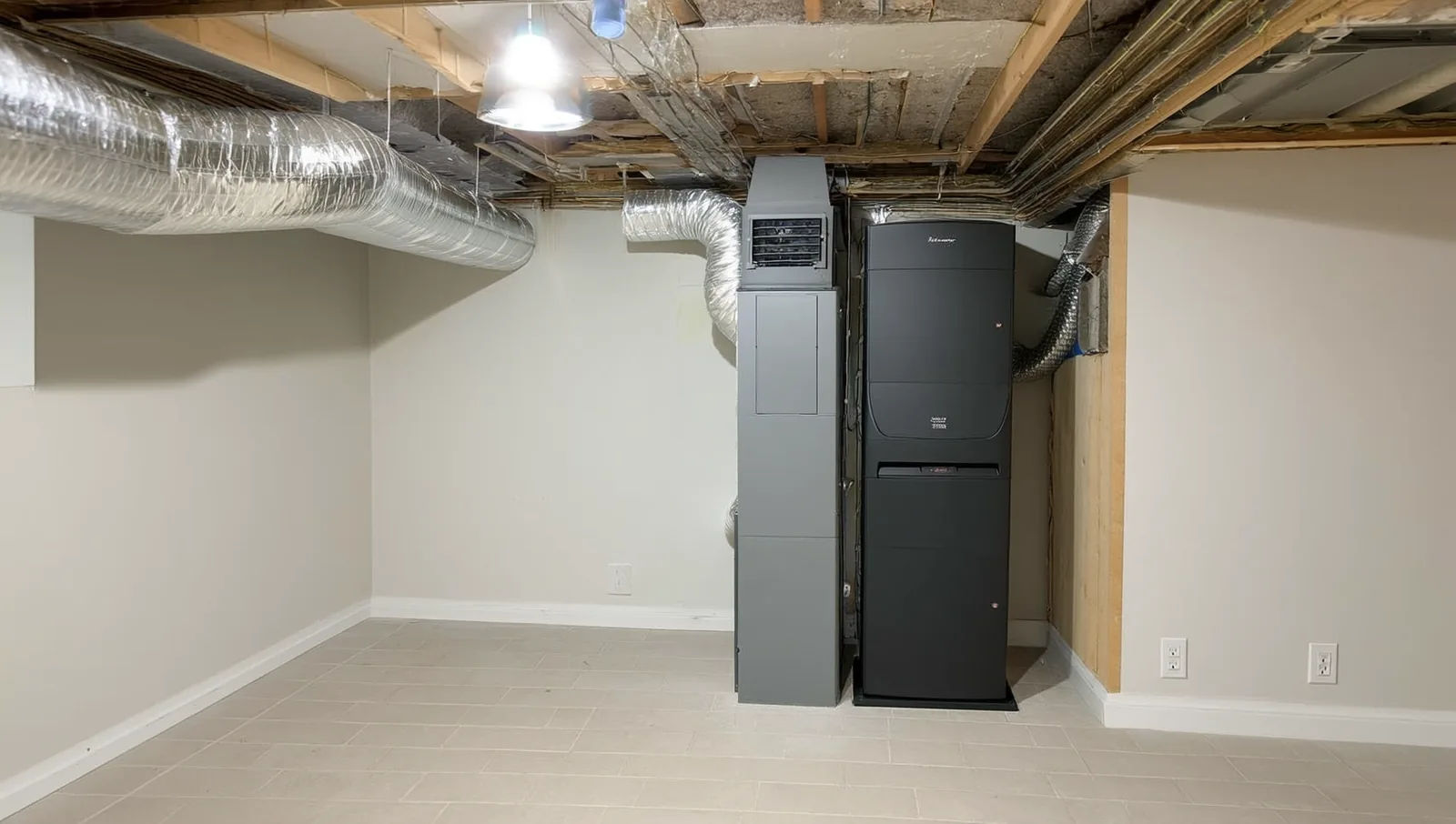
Ductwork. If your ducts leak, are undersized, or are missing entirely, expect to add money here. Sealing and minor repairs run around $1,000 to $3,000; a full replacement or new duct runs can add $3,000 to $8,000. Bolting an efficient new system onto leaky ducts wastes the efficiency you paid for.
Electrical. Heat pumps in particular may need a new circuit or a panel upgrade. A service panel upgrade alone runs roughly $1,500 to $4,000, and total electrical work on a heat pump conversion can add $1,000 to $4,000 to the project.
Refrigerant transition surcharge. New equipment now ships with low global-warming refrigerants (R-32 or R-454B) instead of the phased-out R-410A. That changeover has nudged equipment prices up, often a few hundred dollars and sometimes more depending on the system. It is a real, current line item, not an upsell.
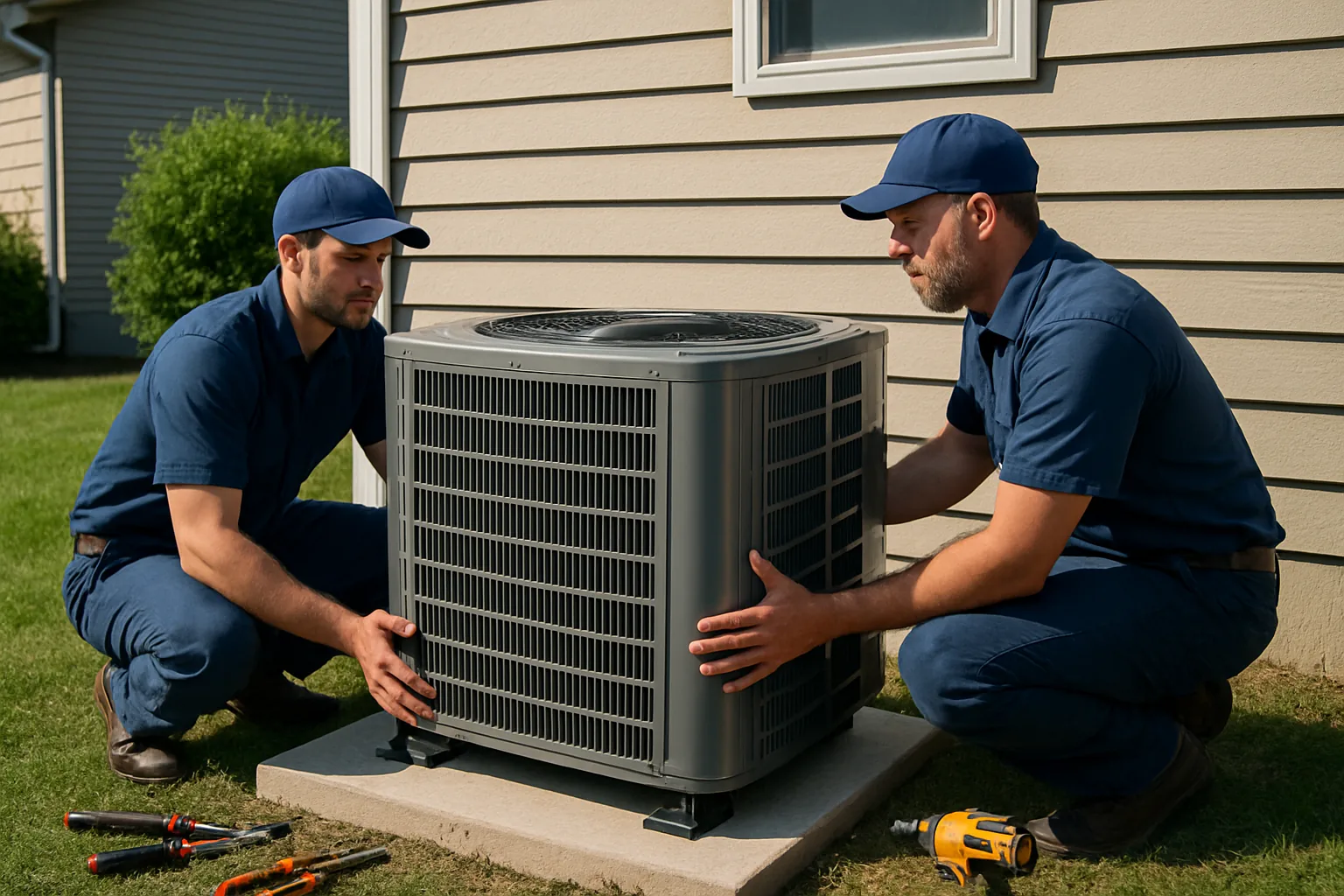
The supporting parts. A new line set or a documented flush of the old one, a pad, an electrical disconnect and whip, condensate drain handling, a thermostat, and a startup that verifies the refrigerant charge and airflow. That final commissioning step is exactly what separates a quote worth paying for from one that just drops in a box.
Why Three Contractors Quote You Three Different Numbers
When the bids come back wildly apart, these are the usual reasons.
Region. Labor rates, material costs, and permit fees all vary geographically. Homeowners in high cost-of-living metros and states like California and New York routinely pay 15 to 25 percent more than the national average for the same system.
Season. HVAC pricing follows demand. Quotes during a July heat wave or a January cold snap, when crews are slammed with emergency replacements, run higher and leave you little room to negotiate. The shoulder seasons, spring and fall, bring better pricing and more scheduling flexibility.
Equipment tier and sizing. One contractor may be quoting a single-stage value unit while another quotes a variable-speed premium system. And if a bidder eyeballs your house and quotes a size off a rule of thumb, the number is meaningless. Correct sizing comes from a Manual J load calculation that accounts for insulation, windows, and air leakage, not from matching whatever tonnage you have now.
What they assume about the hidden work. One bid includes duct sealing and a new disconnect; another leaves them out and “discovers” them mid-job as a change order. This is the single most common reason a low quote balloons. The fix is to make every bidder put the same scope in writing.
What a Fair Quote Looks Like, and the Red Flags
Get at least three written, itemized quotes, and compare them line by line rather than on the bottom number alone. A quote you can trust shows the Manual J result and the matched equipment model numbers, the efficiency ratings and refrigerant, the ductwork and electrical scope, the permit, and a commissioning step that verifies charge and airflow.
Be wary in both directions. The cheapest bid can signal an inexperienced installer, off-brand equipment, a skipped permit, or a sizing guess, all of which cost you later. The most expensive can mean an oversized system or premium add-ons you do not need. Oversizing is the most common and most damaging mistake in the trade: a too-big system short-cycles, never runs long enough to pull humidity, and wears out years early. Before you commit to replacement at all, rule out a cheap repair. Sometimes a system that runs but will not cool needs a part, not a teardown, and our guide to what HVAC service calls cost helps you judge a diagnosis against the replace-it math.
Bringing the Number Down Without Cutting Corners
There is real money on the table for most projects. Federal tax credits, utility rebates, and manufacturer promotions can knock hundreds to thousands off a qualifying high-efficiency system, and the 30 percent residential clean energy credit on geothermal has no dollar cap. Stacking those incentives, plus the financing options many homeowners use to spread the cost, is its own subject, and our 2026 guide to HVAC tax credits, rebates, and the scams targeting them walks through how to claim and verify every dollar.
Beyond incentives, the levers are simple: replace proactively rather than in an emergency so you keep your negotiating power, insist on a proper load calculation so you buy the right size instead of the biggest, schedule in a shoulder season, and weight contractor reputation and licensing as heavily as price. A correctly sized, well-installed mid-tier system from a vetted crew will outperform and outlast a premium unit installed badly, every time.
The Bottom Line
A new HVAC system in 2026 runs most homeowners somewhere between $5,000 and $28,000, with a typical furnace-and-AC replacement in an average home landing in the $7,000 to $20,000 band. Where you fall depends first on system type, then on the line items around the equipment: ductwork, electrical, permits, the refrigerant transition, and labor. Get three itemized quotes, make every bidder price the same scope, demand a Manual J sizing calculation, claim the incentives you are owed, and read the bids line by line. Do that, and the ten-thousand-dollar spread stops being intimidating and starts being something you can actually judge.
Further reading (sources)
- CBS News on what a new HVAC system really costs in 2026
- U.S. Department of Energy with the basics of central air conditioning and system choice
- ENERGY STAR for how heat pump efficiency ratings and incentives work
- ACCA explaining why a Manual J load calculation beats rule-of-thumb sizing
- U.S. EPA covering the AIM Act phasedown driving the refrigerant change