How to Choose a Local HVAC Contractor: Credentials, Red Flags, and Questions to Ask
Published on August 25, 2026

Type “HVAC companies near me” into a search bar and you get a wall of sponsored ads, three map listings, and a stack of directory pages that rank companies partly by who paid to be on them. Local news outlets publish their own roundups too, like the Times Union’s map of the best HVAC companies around Albany, and those are a reasonable starting list. What none of it tells you is whether the person who actually shows up will size your system correctly, pull a permit, or still be in business when the compressor fails in year four.
That gap matters more in this trade than in most. A full system replacement runs $5,000 to $35,000, and unlike a bad paint job, a bad HVAC install hides. An oversized unit, a sloppy refrigerant charge, or a return duct nobody bothered to enlarge will not announce itself on day one. It shows up two summers later as high bills, clammy air, and equipment failing years before its warranty says it should.
The vetting takes about an hour. Here is what to check, in the order that eliminates weak candidates fastest.
Start With the License, Not the Reviews
Reviews are the last filter, not the first. Credentials come first because they are objective and take two minutes to verify.
State or local contractor license. Most states license HVAC contractors at the state level, and several leave it to the city or county, so the right place to look depends on where you live. California issues a C-20 warm air heating, ventilating and air conditioning license through the Contractors State License Board; Texas licenses air conditioning and refrigeration contractors through its Department of Licensing and Regulation. Ask for the license number, then look it up yourself on the licensing body’s site. You are checking three things: that it is active, that it is in the company’s legal name, and that the classification actually covers HVAC work rather than general handyman or general building.
EPA Section 608 certification. Under the Clean Air Act, any technician who opens a refrigerant circuit needs Section 608 certification. Residential split systems and heat pumps are high-pressure equipment, which means Type II or Universal certification. This is not optional or advisory, it is federal law, and since 2018 the rule has covered HFC refrigerants like R-410A as well, which is why only certified techs can even buy the refrigerant. If a company is vague about whether the person doing the work is certified, that answers your question.
There is a newer wrinkle worth asking about. Systems built since 2025 use low global warming potential refrigerants such as R-454B and R-32, which are classed A2L and mildly flammable. They call for different tools, different leak detection, and additional training. Ask directly whether the crew has been trained on A2L systems. Any contractor selling new equipment in 2026 should have a confident answer.
NATE certification. North American Technician Excellence is a voluntary, independent competency test, so it is a plus rather than a requirement. It is one of the few credentials that says something about the individual technician instead of the business, and it has to be renewed with continuing education, so it does not go stale.
Manufacturer authorization. Factory authorized or premier dealer status matters mostly because those programs sometimes carry extended parts warranties and because the manufacturer will side with you if there is a defect dispute. Treat it as a tiebreaker, not a credential.
Insurance and Bonding Are Not the Same Thing
Homeowners hear “licensed, bonded and insured” so often it registers as one word. The three pieces protect you in different ways, and one of them barely protects you at all.
General liability insurance covers damage the contractor does to your property. Ask for a certificate of insurance and ask that it come directly from the insurance agent rather than as a PDF forwarded by the salesperson. Confirm the policy is current, not expired last quarter.
Workers’ compensation is the one people skip and the one with the worst downside. If an uninsured worker is injured in your attic, you can end up the deepest pocket in the room. Any company sending a crew should carry it.
A surety bond is the weakest of the three. It is not insurance for your project; it is a fund, often in the $10,000 to $25,000 range, that pays out on license law violations and can be exhausted by earlier claims. Bonding is worth confirming because most states require it for licensure, but it is not the safety net the marketing implies.
Read Reviews Like an Investigator
Star ratings are close to useless on their own. Patterns are what tell you something.
Look at the shape of the review history rather than the average. A steady trickle across several years reads very differently from forty five-star reviews posted in one week. Read the negative ones specifically, and sort by recent. A complaint about a missed appointment window is noise. Repeated complaints about a system that never worked right after install, warranty claims the company will not honor, or crews that vanished mid-job are the signal.
Watch how the owner responds to criticism. A defensive, personal reply to a bad review tells you exactly how a dispute with you will go.
Check the Better Business Bureau, but understand what you are reading. BBB accreditation is a paid membership, so the letter grade is not an independent audit. The useful part is the complaint history: how many, about what, and whether they were resolved.
Then do one search almost nobody does. Look the business up in your state’s corporate entity registry and compare the formation date against the “serving the area since 1998” line on the website. Contractors with bad histories sometimes dissolve and refile under a new name. A brand new entity with a decades-old claim is worth a question.
What a Real Estimate Actually Looks Like
This is where good contractors separate themselves, and it happens before any price is discussed.
A legitimate replacement quote starts with a load calculation. ACCA Manual J sizes the equipment to your house using orientation, window area, insulation levels, and air leakage, not square footage and a rule of thumb. Manual S picks equipment that matches that load, and Manual D sizes the ducts to carry it. Oversizing is the most common install error in American homes, and it is not a harmless one: an oversized system short cycles, never runs long enough to remove humidity, and wears out its compressor early.
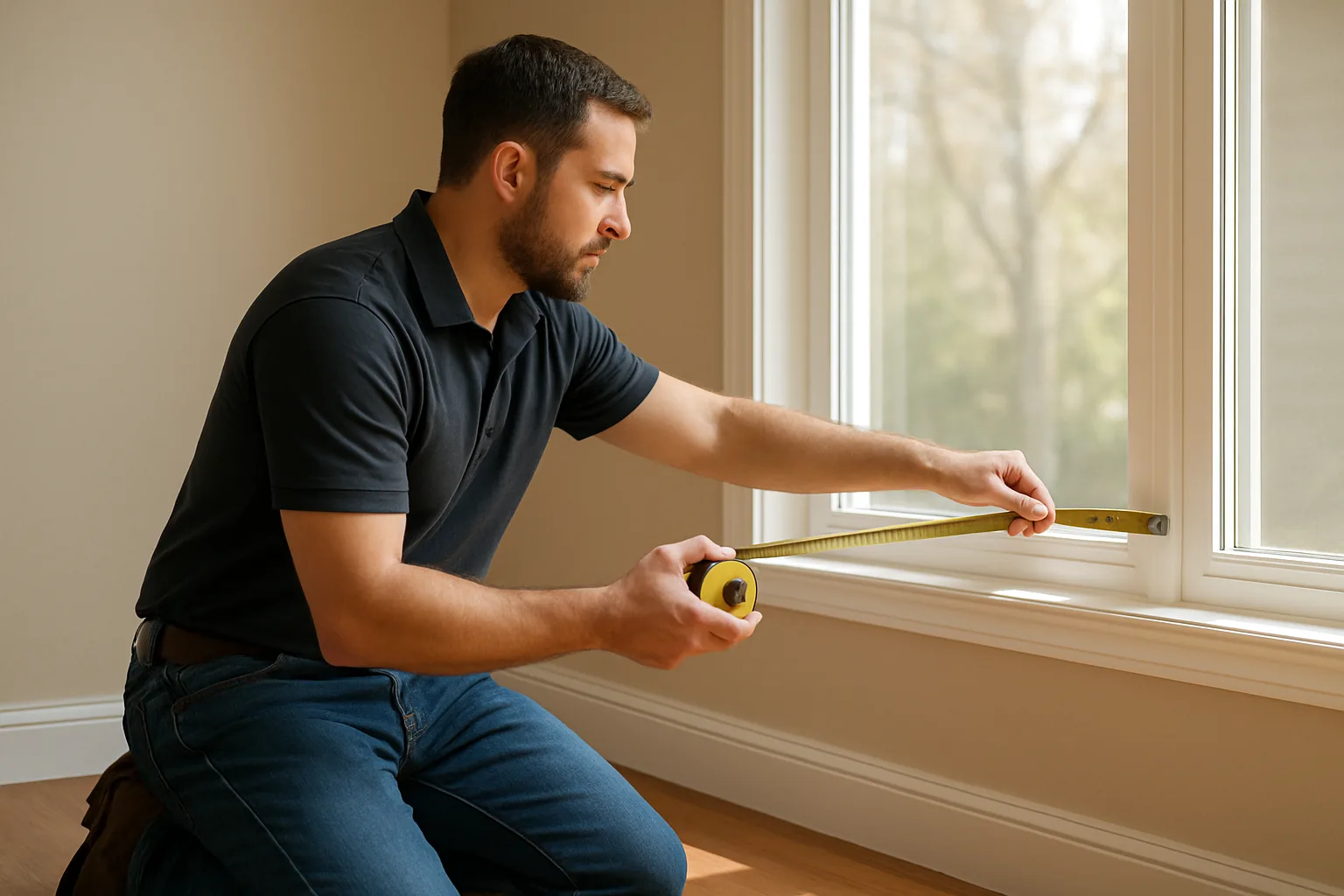
So the site visit should take real time. Expect the estimator to go into the attic or crawlspace, look at the ductwork, check the electrical panel, count and measure windows, and ask how the house actually feels room by room. If your problem is comfort rather than a dead system, a good contractor will diagnose before selling. Plenty of complaints that get answered with “you need a bigger unit” are really airflow problems, and our walkthrough on why the upstairs runs hot in a two-story house covers what an honest diagnosis of that looks like. The same goes for distribution: if nobody mentions your ducts, read our ductwork guide and raise it yourself.
The written proposal should include specific equipment model numbers for both the indoor and outdoor units, the AHRI reference number confirming the pair is a certified matched system, the rated SEER2, HSPF2 or AFUE, the scope of any duct or electrical work, who pulls the permit, labor warranty terms separate from the manufacturer’s parts warranty, a payment schedule, and a total price. A quote that is one line and a number is not a quote.
The Red Flags
Any one of these is a reason to slow down. Two is a reason to walk.
- Pricing given over the phone or from square footage alone, with no site visit and no load calculation
- A discount that expires today, or a price that drops sharply the moment you hesitate
- Door to door or unsolicited phone sales, especially anything invoking free government money
- A large deposit demanded up front. Many states cap this; California limits home improvement down payments to $1,000 or ten percent of the contract, whichever is less
- Cash only, or a check made out to an individual rather than the company
- No permit, or a suggestion that you pull the homeowner permit yourself to save money
- No license number on the estimate or the contract
- A cracked heat exchanger diagnosis with no photo, no video, and no combustion analyzer reading
- Refrigerant topped off year after year with no leak search. Refrigerant is not consumed in a sealed system; if it is low, it is leaking
- Refusal to provide a certificate of insurance
- Financing pushed hard without the terms explained, particularly deferred interest or PACE
That last one connects to a whole category of its own. Rebate and incentive fraud has grown alongside the real programs, and our guide to HVAC money and how to spot a rebate scam walks through verifying an offer through the utility or state energy office rather than through the salesperson’s link.
Questions to Ask Before You Sign
Print these and use them on every bid.
- What is your license number, and what classification is it?
- Is the technician doing the work EPA 608 certified, and at what type?
- Has your crew been trained on A2L refrigerants?
- Will you run a Manual J load calculation, and can I have a copy of it?
- Who pulls the permit, and will there be a municipal inspection?
- What exactly is the labor warranty, in years, and what voids it?
- Do you use your own employees or subcontractors, and are the subs insured?
- What happens to my old equipment and refrigerant?
- What will you measure at commissioning, and will I get those readings in writing?
- Can I have three recent local references from installs like mine?
Question nine separates the top tier from everyone else. A quality install ends with documented numbers: refrigerant charge verified by superheat or subcooling, static pressure across the air handler, and measured airflow. A contractor who plans to hand you those readings is telling you they intend to earn them.
Comparing Three Bids Without Getting Lost
Get three quotes and expect them to differ by thousands. The trap is comparing the bottom line when the scopes are not the same.
Line the bids up on scope first. Same tonnage? Same efficiency tier? Same single stage, two stage, or variable speed compressor? Is duct modification included or excluded? Is the electrical work in or out? Is the permit priced? Is the labor warranty one year or ten? Once the scopes match, the price comparison finally means something, and the cheapest bid is usually cheapest because it left something out. Our full price breakdown by system type shows what each line item should reasonably cost, and if you are still deciding what to buy rather than who should install it, start with which system type fits your home.

One more caution: the highest bid is not automatically the most thorough. What you are paying for is the load calculation, the duct work, the commissioning, and a company that answers the phone in year six. If the expensive quote does not document more work, it is just a bigger number.
After You Choose
The job is not finished at the handshake. Confirm the permit was actually pulled and let the municipal inspection happen before final payment. Register the equipment with the manufacturer inside the registration window, commonly 60 to 90 days, because skipping it can quietly cut a ten-year parts warranty to five. File the model and serial numbers, the AHRI certificate, the commissioning readings, the permit, and the signed contract in one place. And hold a meaningful share of the payment until the system has been tested in the mode you bought it for.
The Bottom Line
Choosing the contractor is a bigger decision than choosing the equipment. Two crews installing the identical heat pump can deliver systems that differ by 30 percent in energy use and a decade in service life. Verify the license and the EPA certification, get the insurance certificate from the insurer, read reviews for patterns rather than stars, insist on a load calculation before anyone quotes a size, get everything in a written itemized proposal, and refuse to be rushed. An hour of homework is cheap insurance on a five-figure purchase, and the good contractors will not mind a single one of these questions.
Further reading (sources)
- U.S. Environmental Protection Agency on who is legally allowed to handle refrigerant
- Federal Trade Commission for how home improvement contracts and scams work
- Air Conditioning Contractors of America with the standard that defines a quality installation
- California Contractors State License Board covering what to verify before hiring anyone
- AHRI on why matched system certification matters
- Times Union with a local roundup of HVAC companies near Albany