Central Air Conditioner Buying Guide for 2026: SEER2, the Refrigerant Switch, and Sizing Done Right
Published on June 5, 2026
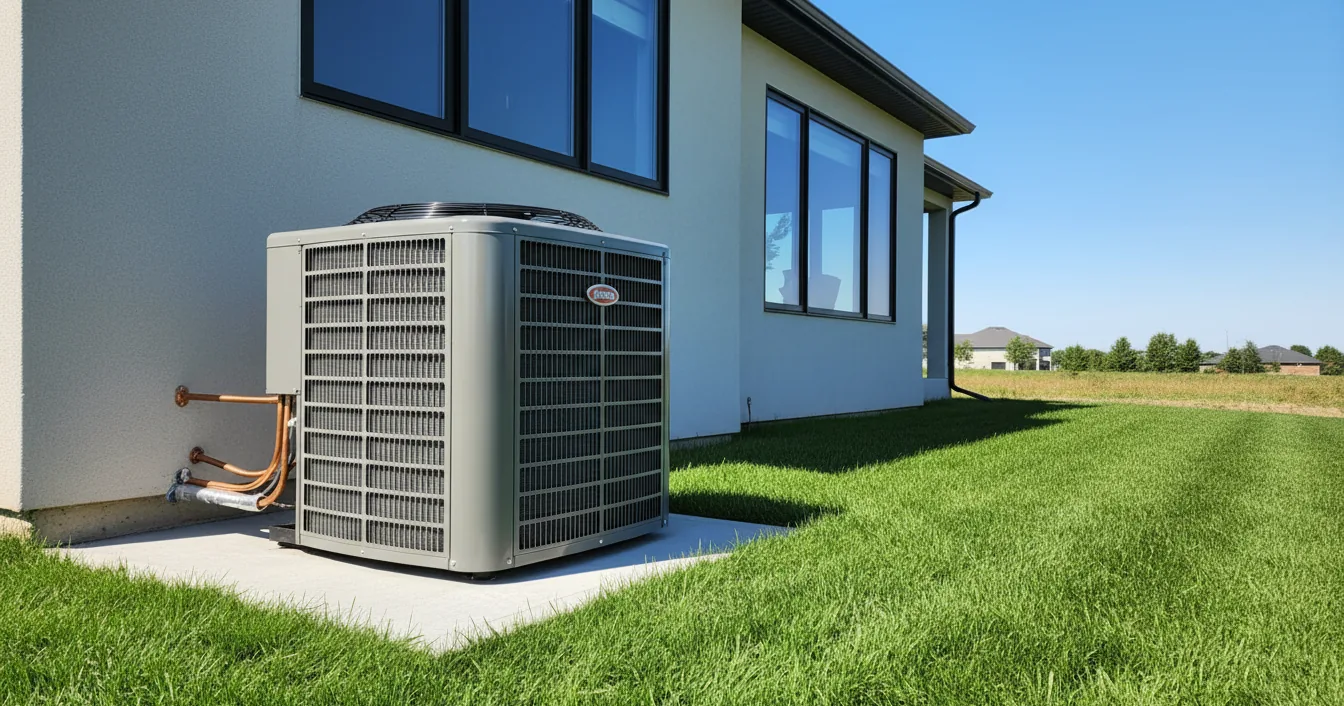
Replacing a central air conditioner is a once-a-decade decision, and 2026 is an unusually complicated year to make it. The equipment is in the middle of the biggest refrigerant change in a generation, the efficiency labels were rewritten in 2023, and prices have climbed. If your 10 to 20 year old system is limping toward its last summer, the good news is that a well-chosen modern unit will cool more evenly, run quieter, and pull more humidity out of the air than the one it replaces, often while using a third less electricity. The bad news is that the gap between a good install and a bad one has never been wider. Here is what actually matters before you sign a quote.
Start Here: Should You Repair or Replace?
Before anything else, find two numbers: the age of your system and the refrigerant it uses. Both are printed on the data plate on the outdoor condenser. A central AC lasts about 12 to 17 years, so anything past 12 is a replacement candidate even if it still runs. The refrigerant matters even more in 2026. If the plate says R-22, the unit is pre-2010 and that refrigerant is no longer produced, so a single leak repair can cost more than the aging unit is worth. If it says R-410A, you have a newer system, but as you will see below, that refrigerant is now being phased out too.
The rough math most contractors use is the “$5,000 rule”: multiply the repair cost by the age of the system, and if the result tops $5,000, replace instead of repair. A $700 compressor-side repair on a 15 year old unit (700 times 15 equals 10,500) is money thrown after a system near the end of its life. A $200 capacitor on a 6 year old unit is an easy fix. When the call is close, our breakdown of what HVAC service calls actually cost can help you judge a diagnosis. And if your heating is also failing, do not buy a cooling-only AC by reflex. Price a heat pump that does both jobs first, because the federal tax credits are far richer on the heating side.
The 2026 Refrigerant Switch: R-410A Is On the Way Out
This is the single biggest reason 2026 is a confusing year to buy. Under the EPA’s AIM Act, the United States is phasing down high global-warming refrigerants. As of January 1, 2025, manufacturers can no longer build residential AC systems that use R-410A, the refrigerant that has been standard since the mid-2000s. New equipment now ships with one of two low-GWP replacements: R-32 or R-454B. Daikin and Goodman went with R-32; Carrier, Trane, Lennox, and most other major brands chose R-454B, which Carrier brands as “Puron Advance.”
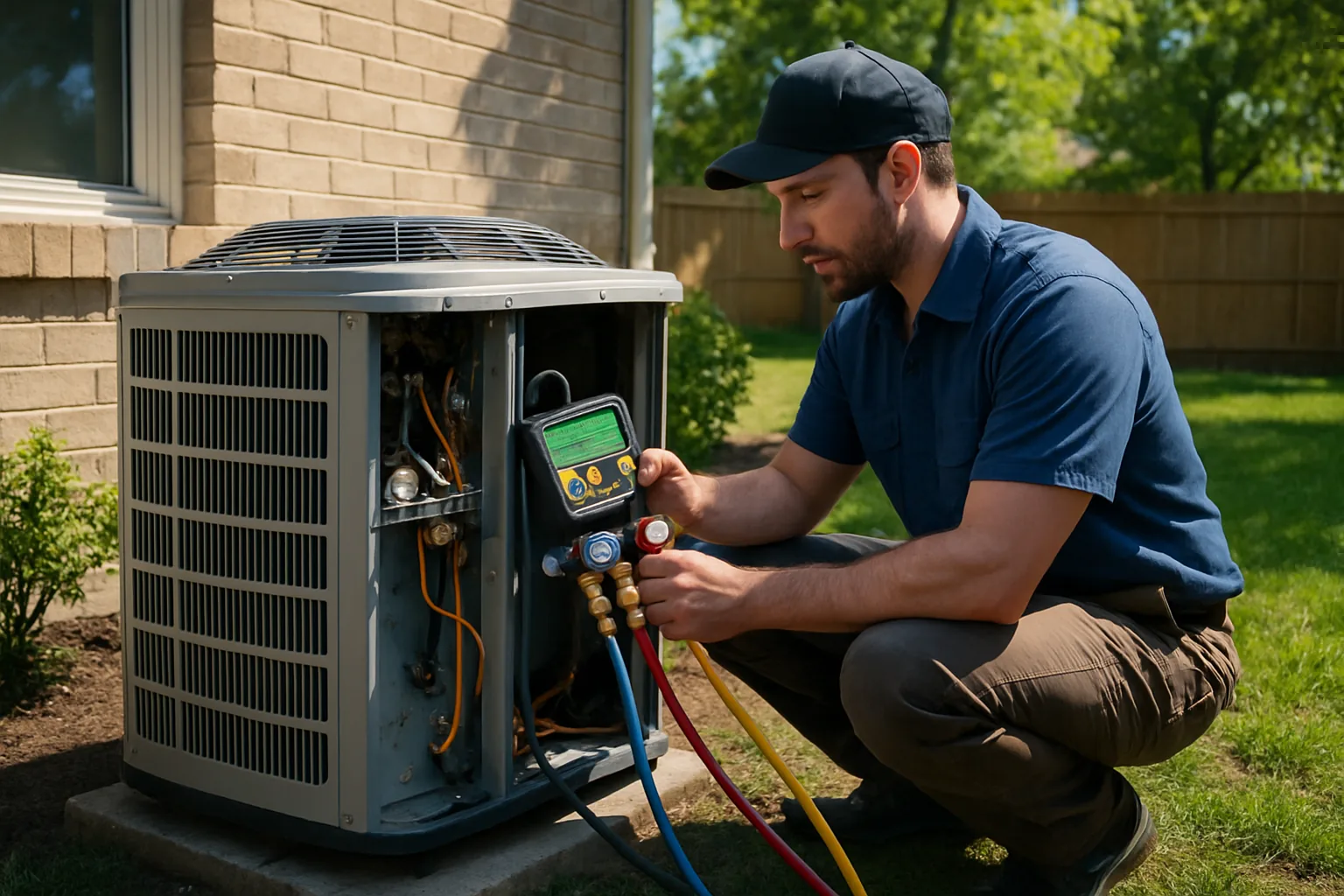
Both new refrigerants are classified A2L, meaning low toxicity and “mildly flammable” with a low burn velocity. That sounds alarming and is not, in practice. A2L refrigerants are very hard to ignite, and the new equipment includes leak sensors and design changes to handle them safely. What it means for you as a buyer is simpler. First, all refrigerant handling still legally requires an EPA 608 certified technician, so this is never a DIY component. Second, be cautious about a deep discount on leftover R-410A equipment. Installers were allowed to fit remaining R-410A inventory through 2025, and a clearance unit can be a legitimate bargain, but R-410A will get more expensive to service over the life of the system as supply tightens, the same path R-22 already walked. For a system you expect to keep 15 years, the new A2L equipment is the more future-proof choice.
Decoding SEER2 and EER2
Every AC sold today wears two efficiency numbers, and both test methods were updated in 2023.
SEER2 (Seasonal Energy Efficiency Ratio, version 2) measures cooling efficiency averaged across a whole season. The 2023 update tests under higher static pressure that better reflects real ductwork, so SEER2 numbers run about 4.5 percent lower than the old SEER for the same hardware. The federal minimum in 2026 is 14.3 SEER2 across the southern states and 13.4 SEER2 in the North. ENERGY STAR certification begins around 15.2 SEER2. Premium variable-speed units crest 20 SEER2 and can cut summer cooling costs by a third or more versus a worn-out 10 SEER unit from 2008.
EER2 is the second number, and it is the one the marketing tends to bury. Where SEER2 is a seasonal average, EER2 measures efficiency at a single hard moment: a steady 95 degree day. If you live in Phoenix or Houston, EER2 tells you more about your actual August bill than SEER2 does, because your system runs near peak far more often. Ask for both numbers and weight EER2 heavily in a hot, dry climate.
Single-Stage, Two-Stage, or Variable-Speed?
The compressor is the heart of the system, and how it runs decides how the house feels.
Single-stage compressors are either fully on or fully off. They are the cheapest option and perfectly adequate for smaller homes and mild climates, but they cool in hard bursts and tend to leave humidity behind. Two-stage compressors add a low setting, around 65 to 70 percent, that handles most days. They run longer and gentler, hold temperature more evenly, and wring out noticeably more moisture. Variable-speed (inverter) compressors modulate anywhere from roughly 25 to 100 percent, so on a typical day they idle along at low output for hours. That long, slow run produces the best comfort, the quietest operation, the driest air, and the highest SEER2 ratings of any option.
The tradeoff is cost and complexity. A variable-speed system adds roughly $2,000 to $4,000 over a single-stage one and has more electronics that can eventually fail. It pays off most in humid climates and larger homes, and it pairs beautifully with a communicating smart thermostat that can actually command those intermediate speeds. In a small house in a dry climate, a good two-stage unit is often the sweet spot.

Sizing Done Right: Manual J and Manual S
The most common and most damaging install mistake in the entire industry is oversizing. An oversized AC blasts the thermostat to setpoint and shuts off before it has run long enough to dehumidify, leaving the house cold and clammy. It also short-cycles, which wears the compressor out years early.
Correct sizing is not a guess from square footage. It is a Manual J load calculation, the ACCA standard that accounts for your insulation, window area and orientation, air leakage, ceiling height, and local design temperature. The result is your cooling load in BTUs per hour, which converts to tons (one ton equals 12,000 BTU). A matching step called Manual S then selects a specific unit to fit that load, not one rounded up “to be safe.” A reputable contractor performs Manual J on every bid. If one eyeballs your house and quotes a size from a rule of thumb, get a different contractor.
One more sizing detail protects your efficiency rating. The SEER2 and EER2 numbers only apply to a specific AHRI-matched combination of outdoor condenser, indoor coil, and air handler. Bolt a new condenser onto an old, mismatched coil and you lose both the rating and, often, the warranty. Insist the quote lists an AHRI certified matched system by model number.
Brands, Tiers, and Why the Installer Matters More
HVAC brands sort into rough tiers. The premium names are Carrier, Trane, and Lennox. The strong mid-tier includes Rheem and Ruud, Bosch, Daikin, and American Standard. The value tier covers Goodman, Payne, and Ducane. What surprises most buyers is how few companies actually own these labels: Carrier also makes Bryant and Payne, Trane Technologies makes Trane and American Standard, Daikin owns Goodman and Amana, and Johnson Controls makes York and Coleman. The internals are often shared up and down a parent company’s lineup.
Which is why the honest answer to “what brand should I buy?” is this: pick a reputable mid-tier or premium unit, then spend your real energy vetting the installer. Survey after survey finds that installation quality, the refrigerant charge, the airflow, and the duct connections drive performance far more than the badge on the cabinet. A perfectly good Trane installed badly will underperform a Goodman installed well. Check that the company is licensed, pulls a permit, and warranties its labor, then book the annual maintenance visit that keeps the warranty valid and the system healthy.
What a Fair 2026 Quote Looks Like
A central AC replacement in 2026 typically runs $5,500 to $13,000 installed for the condenser and matched indoor coil, with variable-speed and larger-tonnage systems reaching higher, and a project that also swaps the air handler or furnace costing more. Get three written quotes and compare them line by line rather than on the bottom number alone.
A complete, fair quote should spell out: the Manual J result and the AHRI-matched model numbers; the SEER2 and EER2 ratings and the refrigerant (R-32 or R-454B); a new line set or a documented flush of the existing one; a new pad, electrical disconnect, and whip; a permit and inspection; condensate drain handling; and a startup that verifies the refrigerant charge and airflow rather than just “topping it off.” Most systems in the field run improperly charged, and careful commissioning is exactly what separates a quote worth paying for. Register the equipment after install to lock in the 10-year parts warranty most manufacturers offer.
Finally, run the incentive math before you sign. A central AC that meets the highest CEE efficiency tier qualifies for the federal 25C tax credit, 30 percent of the cost up to $600, and many utilities add a rebate on top. Our 2026 guide to HVAC tax credits, rebates, and the scams targeting them walks through how to stack and verify every dollar.
The Bottom Line
A central AC bought well in 2026 should last you into the late 2030s. Confirm your system’s age and refrigerant first, lean toward the new A2L equipment (R-32 or R-454B) so you are not chained to a phased-out refrigerant, and target a SEER2 and EER2 that fit your climate rather than the biggest number on the sticker. Choose two-stage or variable-speed for humid climates and larger homes, demand a Manual J calculation and an AHRI-matched system, and then vet the installer harder than the brand. Get three quotes, read them line by line, claim the credit you are owed, and you will have made a once-a-decade decision the right way.
Further reading (sources)
- The New York Times Wirecutter on the central and room AC features that actually matter
- U.S. Department of Energy with the official primer on central air conditioning
- U.S. EPA explaining the AIM Act phasedown of HFC refrigerants
- ENERGY STAR for how the SEER2 central AC specifications work
- ACCA covering why a Manual J load calculation beats rule-of-thumb sizing