Is Your House Under-Ventilated? The Health Evidence on Fresh Air Rates and How to Check Your Own Home
Published on October 14, 2026
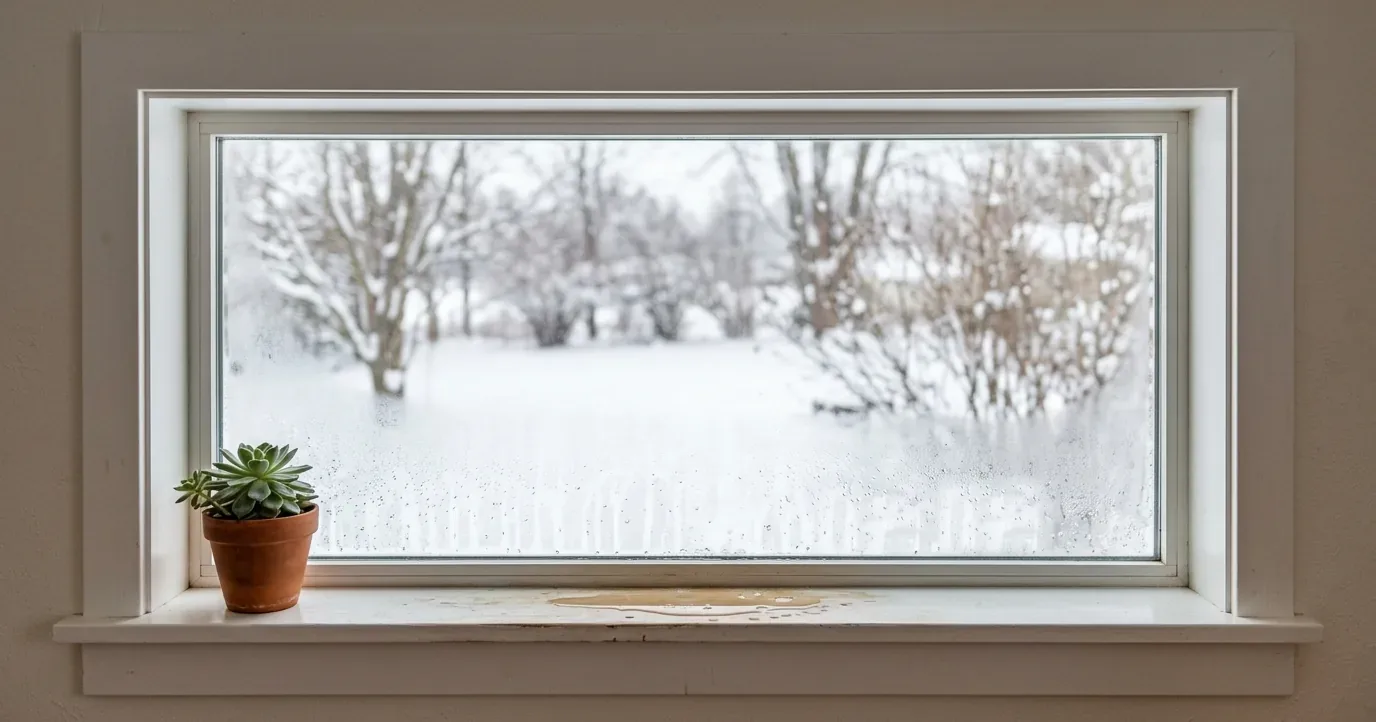
The house has never been tighter. The attic is sealed, the drafty old windows are gone, and the new furnace breathes through a plastic pipe in the side wall instead of the chimney. The heating bill fell. Yet the bedroom feels close by morning, the windows fog on cold nights, and last night’s dinner still hangs in the air at breakfast.
Those are the classic complaints of a house that no longer gets enough outdoor air. Older houses ventilated themselves by leaking, and every efficiency upgrade closes some of those leaks. Here is what the research links to too little fresh air, how much your house needs, how homes lose it by accident, how to check yours over a weekend with a carbon dioxide (CO2) monitor, and the fixes in order of cost.
What the Research Links to Too Little Fresh Air
Ventilation dilutes everything people, cooking, furniture and the house itself release into the air, so researchers study the ventilation rate itself rather than one pollutant at a time.
A 2004 review by Seppänen and Fisk in the journal Indoor Air found evidence linking ventilation to five kinds of outcome: respiratory infections passed between people, sick building syndrome symptoms, how well people perform tasks, how fresh the air seems, and allergies and asthma. For homes in cold climates, the authors concluded, the air change rate should not fall below about 0.5 per hour, meaning half the air in the house replaced with outdoor air every hour.
The strongest home evidence involves children. Bornehag and colleagues measured ventilation with a tracer gas in 390 Swedish homes and found that about 80 percent of the single-family houses fell short of the 0.5 air changes per hour the Swedish building code requires. Children with at least two of three symptoms (wheezing, rhinitis and eczema) lived in homes with significantly lower ventilation rates than healthy children, and the data pointed to a dose-response relationship. A multidisciplinary review led by Sundell reached a similar conclusion: in a Nordic climate, home ventilation above 0.5 air changes per hour has been associated with a lower risk of allergic symptoms in children.
The everyday complaints show up in the data too. Hou and colleagues monitored bedroom CO2 in 165 homes across China for a full year and found that higher levels went with more reports of stuffy odor and more skin symptoms. In student dormitory rooms, Strøm-Tejsen and colleagues at the Technical University of Denmark cut average bedroom CO2 from roughly 2,400 to 2,600 parts per million (ppm) to between 660 and 835 ppm, by opening a window or running a quiet fan in the air intake. With the fresher air, wrist-worn monitors recorded better sleep, and the students rated the air fresher, reported less next-day sleepiness and better concentration, and scored higher on a test of logical thinking.
Nobody should promise more than that. When Fisk reviewed 20 studies of home ventilation and health in 2018, just over half reported at least one statistically significant benefit from more ventilation, and wheeze was the outcome most clearly linked. The benefits did not appear consistently, and the research could not identify a threshold below which harm begins. Not every sleep study agrees either: when 36 children aged 10 to 12 slept in a climate chamber with CO2 at 2,000 to 3,000 ppm, Klausen and colleagues found no effect on their thinking the next morning. The fair summary is that chronically low ventilation is a likely risk factor, mostly for respiratory and allergic symptoms, and that it works best alongside cutting pollutants at the source rather than as a substitute for it.
How Much Fresh Air Your House Needs
The yardstick most U.S. ventilation programs use is ASHRAE Standard 62.2. Since its 2013 edition it has set the total outdoor air a house needs with one formula, in cubic feet per minute (CFM):
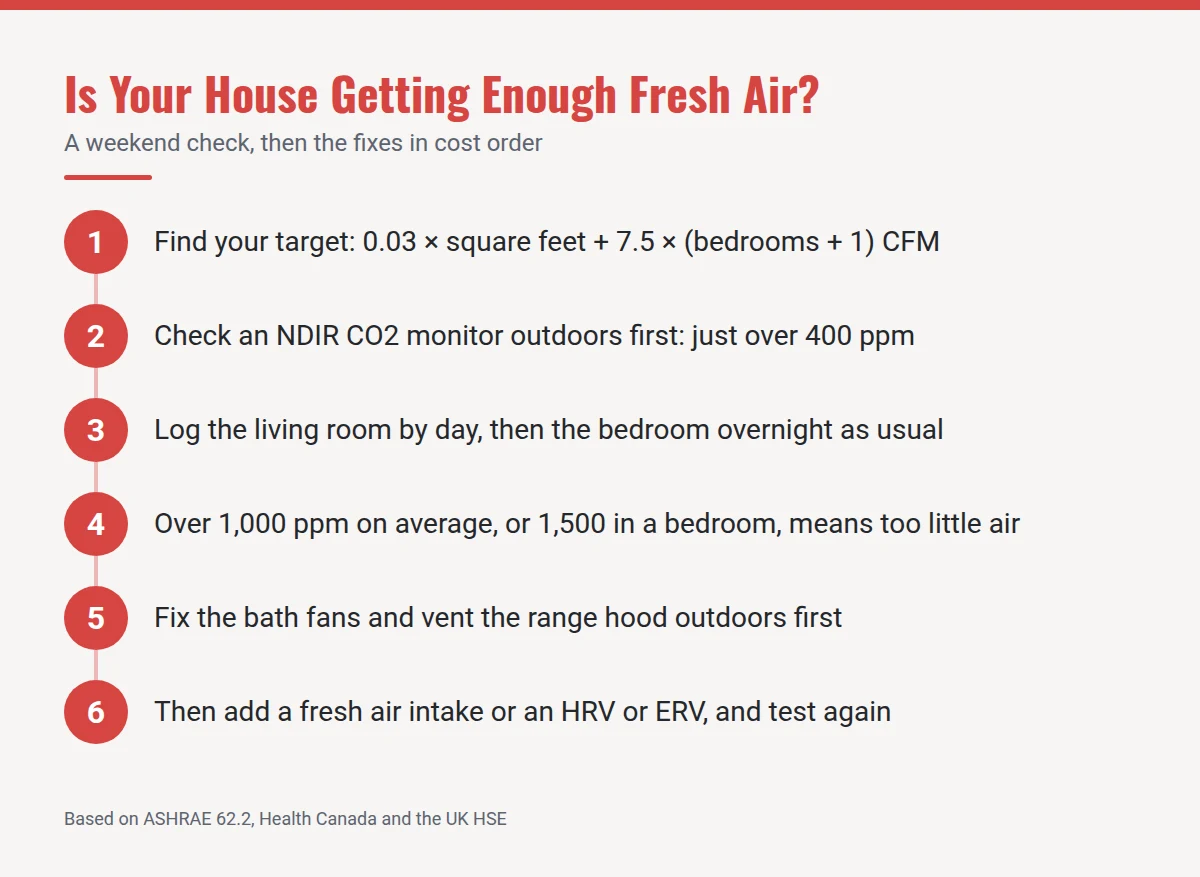
Fresh air (CFM) = 0.03 × floor area in square feet + 7.5 × (bedrooms + 1)
The first term grows with the size of the house and the second with how many people it can sleep. Some worked examples:
- 1,000 square feet, 2 bedrooms: about 53 CFM
- 1,500 square feet, 3 bedrooms: 75 CFM
- 2,000 square feet, 3 bedrooms: 90 CFM
- 2,500 square feet, 4 bedrooms: about 113 CFM
Keep two things in mind. First, it is a minimum. Building America’s guide to ventilating existing homes, written for the U.S. Department of Energy (DOE), makes that point, while noting that some building scientists think the rates are too high for many houses. For a 2,000-square-foot house with 8-foot ceilings, 90 CFM replaces about a third of the air every hour. The 0.5 air changes per hour behind the Nordic studies would take about 133 CFM.
Second, the formula gives a total, and air that leaks in through the walls counts toward it. Once a blower door test has measured the leakage, the standard lets a contractor subtract an infiltration credit and size the fan for what is left. In one of the guide’s examples, a two-story, three-bedroom house of 2,500 square feet in Albany, New York, needs 105 CFM by the formula, but after its blower door test only a 42 CFM fan. A drafty old house may need little or no fan. A tight one needs close to the full number.
The standard also sets minimums for spot exhaust where moisture and cooking fumes start: at least 50 CFM from a bathroom fan used intermittently (or 20 CFM from one that runs continuously), and at least 100 CFM from a kitchen fan or range hood.
New homes built to recent codes must have whole-house ventilation. The 2021 International Residential Code requires it in every new home that meets the energy code’s air-leakage requirements, and earlier editions required it once a home tested at 5 air changes per hour or tighter at 50 pascals (ACH50) in a blower door test. An existing house can cross the same line one project at a time, and nobody may think to ask.
How a House Ends Up Short of Air by Accident
Nobody sets out to under-ventilate a house. It happens through improvements worth making anyway.
Air sealing, insulation and new windows. Each one closes leaks that used to bring outdoor air in. Natural Resources Canada’s (NRCan) gas heating guide explains that dry winter air in a house is caused by too much outdoor air leaking in, and that most draftproofed houses no longer need a humidifier. It also cautions that making a house extremely airtight “can cause excess humidity and poor air quality.” If a house that used to need a humidifier now fogs its windows on cold mornings, the leaks that ventilated it are gone. The sealing is still worth doing, as our envelope guide explains; it just needs ventilation to go with it.
A new furnace or water heater. An old naturally aspirated furnace vents through a draft hood into a chimney, and the same NRCan guide counts “warm house air drawn up the chimney” among the losses of fuel-burning systems. A sealed combustion condensing furnace pipes outdoor air straight to its burner and “does not draw any air from inside the house for either combustion or vent gas dilution.” That is a real efficiency gain, as our gas furnace buying guide covers, but it also ends a stream of exhaust that ran all winter. Replacing a draft-hood water heater with a sealed or electric model closes the same path.
Fans that never worked. The DOE guide found that older bath fans often move a small fraction of their rated airflow: a typical fan rated at 50 CFM delivers only 23 to 31 CFM against the resistance of a real duct. Some ducts end in the attic rather than outdoors, and a recirculating range hood “removes few contaminants.” When Lawrence Berkeley National Laboratory (LBNL) researchers tested 15 kitchen exhaust devices installed in homes, 10 topped out at 70 percent or less of the airflow claimed in their product literature.

How the house is lived in. Bedroom doors shut overnight, windows closed through the heating and cooling seasons, and more people home all day each add load to the same air. A home office with the door closed is a common case, which our guide to working from home covers.
Rule out carbon monoxide first. The EPA lists flu-like symptoms that clear up after leaving home as a sign of carbon monoxide exposure, along with headaches, dizziness and nausea at higher levels. If anyone in the house has symptoms like that, or a CO alarm sounds, get everyone outside and call 911 or your gas utility from there. Tightening a house can create this hazard: NRCan warns that tight construction combined with kitchen and bath fans and clothes dryers can cause spillage and backdrafting from fuel-burning appliances. With a draft-hood furnace or water heater, ask for a combustion safety test after any air sealing or new exhaust fan, and keep CO alarms on each level outside each sleeping area, as the Consumer Product Safety Commission recommends.
Check Your House With a Weekend of CO2 Readings
Carbon dioxide is the easiest way to see your ventilation, because people breathe it out at a steady rate: with too little outdoor air it climbs, and with plenty it stays near the outdoor level. Health Canada notes that indoor CO2 is often used as a stand-in for the ventilation rate, and its residential guideline sets a long-term limit of 1,000 ppm averaged over 24 hours. The limit rests on studies in schools and offices that linked rising CO2 to headache, tiredness, dizziness, difficulty concentrating and poorer test performance.
Use the right meter. Buy a monitor with an NDIR (non-dispersive infrared) sensor, the type the UK’s Health and Safety Executive (HSE) recommends. Some cheaper air quality monitors display an “eCO2” figure estimated from a VOC sensor instead, and that is a poor substitute: in a field comparison by Kolarik at the Technical University of Denmark, VOC and CO2 sensors agreed on whether a space needed more ventilation only 49 percent of the occupied time.
Check it outdoors first. Let it settle outside, away from people and traffic. Outdoor readings run a little above 400 ppm (the Canadian guideline cites outdoor measurements up to 442 ppm), and if yours is far off, follow the maker’s calibration steps.
Place it the way HSE advises: at head height, away from windows, doors and supply registers, and more than 50 centimeters (about 20 inches) from anyone, since exhaled breath makes it read high.
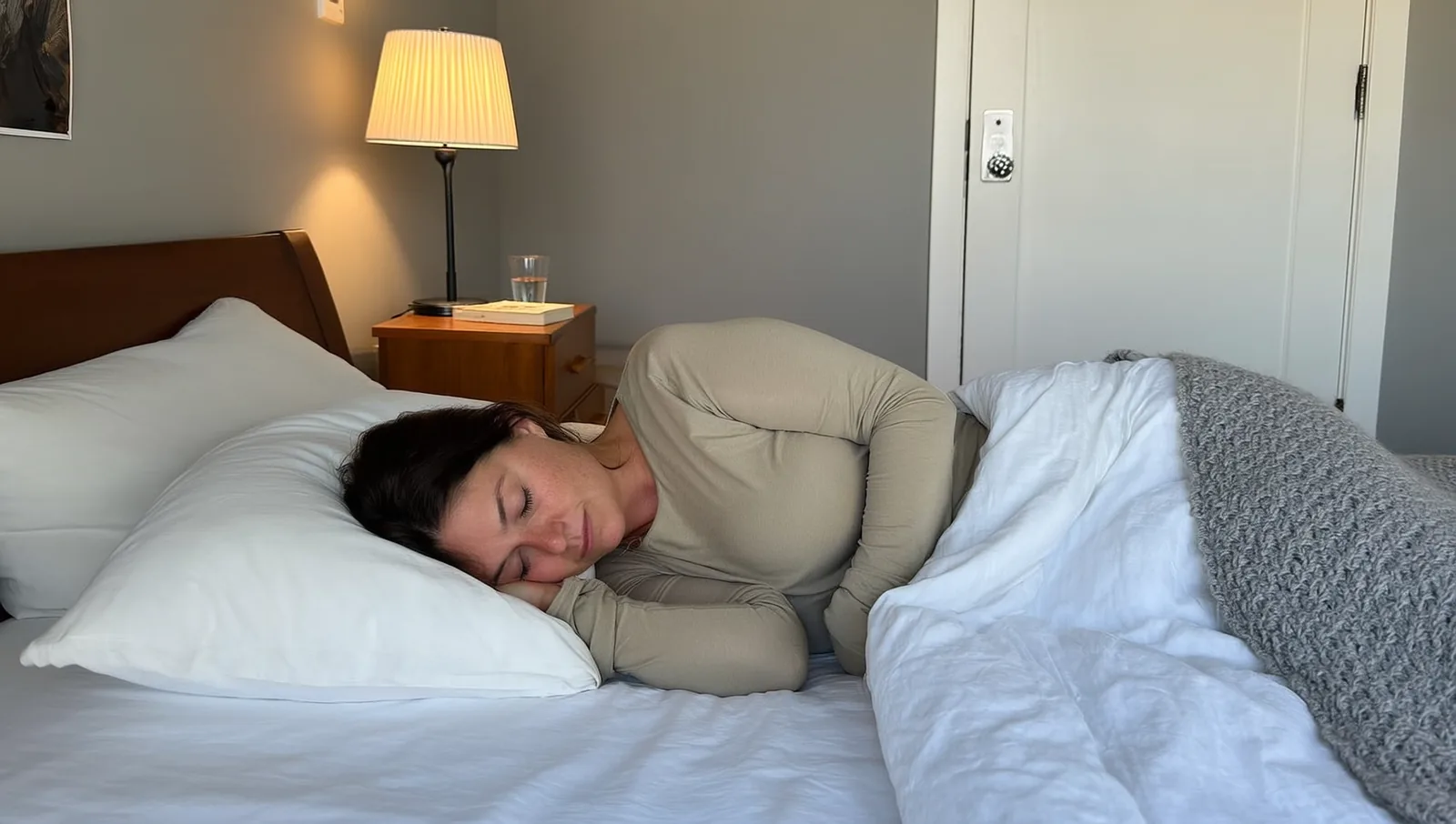
Log the house as you actually live in it. The Canadian guideline calls for at least 24 hours of sampling under normal conditions, so a weekend gives you two days and two nights. Leave the monitor in the main living area on Saturday, move it to the main bedroom for Saturday night with the door and windows the way you normally keep them, and try a child’s bedroom on Sunday night.
Then read the results three ways:
- The 24-hour average. The Canadian limit is 1,000 ppm. In the guideline’s measurements in six Canadian cities, median hourly levels ranged from 418 to 729 ppm by city, and the 95th percentile of hourly levels from 477 to 1,483 ppm. A home that averages above 1,000 ppm is short of air for the people in it.
- Peaks in occupied rooms. HSE treats CO2 “consistently higher than 1500ppm in an occupied room” as a sign of poor ventilation, while cautioning that CO2 is only a broad guide to ventilation, not proof that the air is safe.
- The bedroom plateau. A closed bedroom’s reading climbs and then levels off, and the plateau translates roughly into airflow. A sleeping adult exhales about 11 liters of CO2 an hour, according to a 2021 sleep study by Fan and colleagues. With two adults in the room and about 420 ppm outdoors, a plateau near 1,000 ppm means roughly 20 CFM of outdoor air is reaching the room. At 1,500 ppm it is about 12 CFM, and past 2,000 ppm it is under 10.
Know what the test cannot tell you. CO2 tracks ventilation per person. It says nothing about radon, carbon monoxide, cooking particles or chemicals from new furniture. And when the outdoor air is the problem, as in wildfire smoke, the Canadian guideline notes that bringing in less of it can do more for your health than hitting the CO2 limit.
Fixes in Cost Order
Fix from the cheapest end and repeat the weekend test after each step. Step 3 needs ductwork and a furnace or air handler, so a home heated by radiators or baseboards skips it. The prices below come from that DOE guide, published in 2014, so treat them as a ranking rather than a quote, and get more than one bid for anything beyond a fan swap.
1. Make the exhaust you already have work. Find where each bath fan’s duct ends and make sure it is outdoors. As a crude check, a running fan should hold a single square of toilet paper against its grille. Failing means it moves very little air, though passing proves little about the real flow. Replace weak fans with quiet, efficient models, which draw 5 to 12 watts for 50 to 80 CFM, and put them on a delay-off timer or humidity control so they keep running after the shower. The DOE guide put those fans at $100 to $250, plus about $100 to install where an old fan’s wiring and duct can be reused.
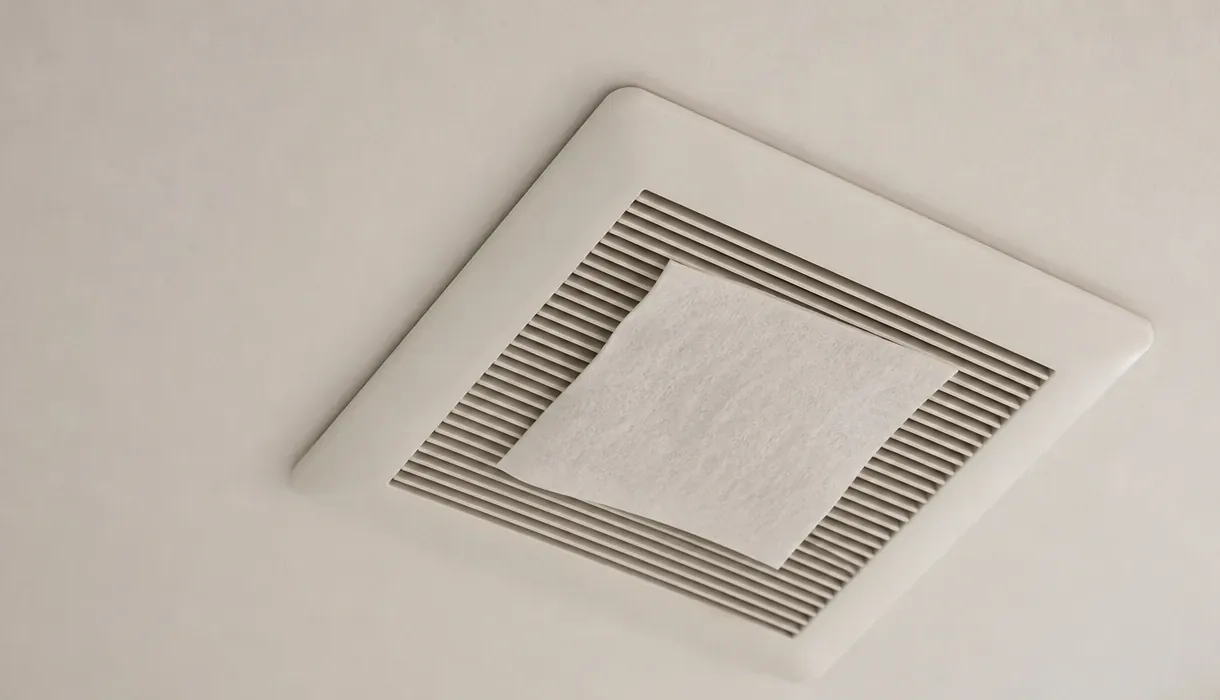
A good bath fan can also serve as the whole-house system. Running continuously at low speed, or cycled by a timer (a 50 CFM fan running 36 minutes of every hour equals 30 CFM continuous), it pulls stale air out while outdoor air leaks in to replace it, and a 10-watt fan running all year uses about 88 kWh. The guide warns against relying on exhaust alone in homes with atmospheric combustion appliances, damp or moldy crawlspaces or basements, or an attached garage that is not sealed off from the house, because the suction can upset those appliances’ draft or pull air in through those spaces.
2. Vent the range hood outdoors, and use it. In an LBNL simulation of Southern California homes, 62 percent of people in homes that cooked on gas burners without using a venting range hood were routinely exposed to nitrogen dioxide above acute health-based standards. The researchers estimated that regular use of even a moderately effective hood would cut that share dramatically. Run the hood every time you cook, and favor the back burners, which hoods capture far better than the front ones. A recirculating hood catches grease but sends the air back into the kitchen.
3. Add a fresh air intake to the air handler you already own. A contractor runs a duct from an outdoor intake hood to the return side of the furnace or air handler, with a motorized damper and a controller that runs the blower for a set share of each hour, so outdoor air passes through the system’s filter and reaches every room. The DOE guide put this central fan integrated supply (CFIS) setup at $500 to $900 where the air handler and an outside wall are easy to reach. The catch is electricity. An efficient blower drawing 300 watts for an extra eight hours a day uses 876 kWh a year, many existing blowers draw two or three times as much, and the guide recommends the approach only for air handlers with variable-speed ECM blower motors. Codes typically want the intake at least 10 feet from sources of contaminants. Our Ductwork 101 covers the duct side.
4. Add a balanced HRV or ERV. A heat recovery ventilator (HRV) or energy recovery ventilator (ERV) exhausts stale air and supplies outdoor air at the same time, through a core that passes heat (and, in an ERV, moisture) between the two streams. Being balanced, it does not depressurize the house, and recovering heat cuts the cost of conditioning the incoming air. It is also the priciest option: the guide put the core hardware at $400 to $2,000, with high-end European units at $3,000 to $5,000, and reported installations of $1,000 to $1,500 where every duct could run through an open basement or attic. Our indoor air quality guide explains which type suits which climate. In states that have launched the federal Home Energy Rebates, DOE says the electrification rebate can be used for ventilation as well as insulation and air sealing, and your state energy office sets who qualifies.
Measure, Fix, Measure Again
Whatever you change, run the weekend test again. A reasonable goal is a 24-hour average under Health Canada’s 1,000 ppm and a bedroom that stays below HSE’s 1,500 ppm overnight with the door closed. If the numbers looked fine all along, the stuffiness has another cause, such as humidity, a dirty filter or a room the ductwork barely reaches, and more outdoor air will not fix it.
Further reading (sources)
- Seppänen and Fisk, in Indoor Air, summarizing how ventilation rates affect occupants’ health and comfort
- Bornehag and colleagues on ventilation rates and allergic symptoms in 390 Swedish homes
- Sundell and colleagues with a multidisciplinary review of ventilation rates and health
- Hou and colleagues for a year of bedroom CO2 readings and stuffiness complaints in Chinese homes
- Strøm-Tejsen and colleagues on bedroom air quality, sleep and next-day performance
- Fisk, reviewing what 20 studies show about home ventilation rates and health
- Klausen and colleagues with a sleep trial in children at high CO2
- Fan and colleagues measuring how much CO2 people exhale while asleep
- Building America, U.S. Department of Energy, with a measure guideline for selecting ventilation systems in existing homes
- International Code Council on the 2021 IRC change to mechanical ventilation in new homes
- Natural Resources Canada on draft hoods, sealed combustion and airtight houses in its gas heating guide
- EPA on carbon monoxide symptoms and where to put CO alarms
- Health Canada for its residential indoor air quality guideline for carbon dioxide
- UK Health and Safety Executive on choosing, placing and reading CO2 monitors
- Kolarik, in DTU’s research repository, comparing VOC and CO2 sensors as signals for ventilation
- Logue and colleagues at LBNL on pollutant exposures from gas cooking without a vented hood
- Singer and colleagues on how installed kitchen exhaust devices actually perform
- U.S. Department of Energy on what the Home Energy Rebates can pay for