Spring HVAC Switchover: Your Heating-to-Cooling Transition Checklist
Published on August 29, 2026
The busiest week of the year for most HVAC companies is the first genuinely hot week of June. A large share of those calls are for systems that were fine in September and have been sitting untouched ever since. Nothing broke over the winter. The failure was already there, waiting, and nobody found it because nobody ran the air conditioner between October and the day they actually needed it.
That is the whole argument for a deliberate spring switchover. Twenty minutes on a mild April afternoon, with the windows open and no urgency, is the cheapest diagnostic appointment you will ever get. Here is the order to work in.
Start With Two Numbers: Age and Type
Find the age of your equipment before touching anything. It is usually on the data plate of the outdoor unit and often encoded in the first four digits of the serial number. A central split system typically lasts 12 to 17 years, an air-source heat pump 10 to 15, a gas furnace 15 to 20. That number changes how you read everything below, and whether a rough test run means a $400 repair or a round of replacement quotes.
Type matters just as much. With a heat pump there is no furnace to shut down, because the same outdoor unit that heated the house all winter is about to cool it, so your switchover is a mode change plus the outdoor prep. A gas furnace paired with a separate condenser gives you two distinct jobs.
Shut the Heating Side Down Cleanly
Most people skip this half entirely, and it causes real problems in July.
Deal with the whole-house humidifier. If one is bolted to your plenum, it has a bypass damper with summer and winter positions plus a small water supply valve. Close the damper to summer and shut the water off. A humidifier left running into cooling season fights an air conditioner that is trying to pull moisture out of the house, and a leaking one quietly rots the sheet metal it hangs on. Swap the pad while you are there, since it is an annual part.
Test the carbon monoxide alarms. The furnace is about to sit idle for six months, so this is the natural moment to hit the test button on every detector, replace batteries, and check the manufacture date on the back. Detectors expire at seven to ten years, and an expired one is decoration. If you smell gas or an alarm sounds for real, leave the house first and call your gas utility or 911 from outside. That is not a troubleshooting situation.
Leave the gas valve alone in most cases. Modern furnaces use electronic ignition, so an idle one burns nothing. Older units with a standing pilot waste a little fuel over the summer, and you can shut those down if you are genuinely comfortable relighting the pilot in the fall. For a boiler, switching off the service switch is enough. Do not drain the system.
Prep the Condenser Before You Ask It for Anything
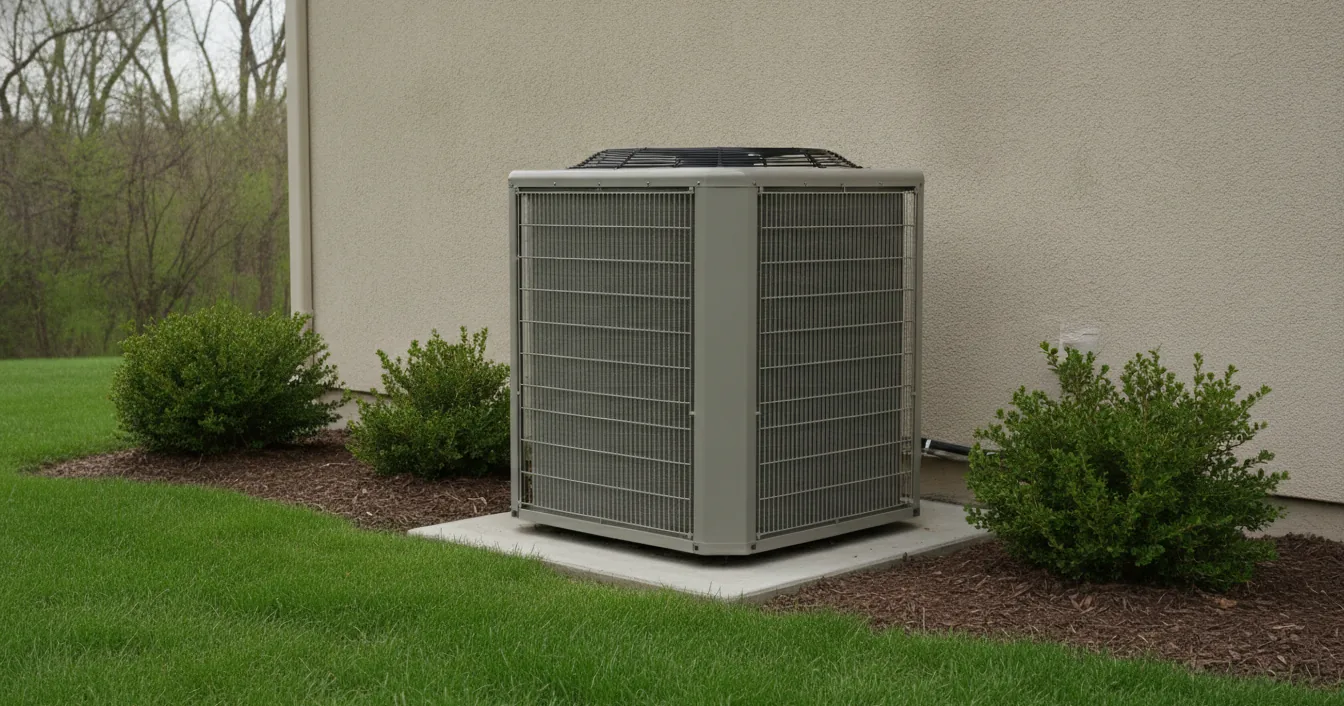
Pull the cover off and look inside. Full wrap covers are a bad idea to begin with, because they trap moisture against the coil and make an ideal winter home for mice and chipmunks, who chew wiring. Look down into the unit for nests and leaf pack before power goes anywhere near it.
Kill the power properly. There is a pull-out disconnect box on the wall near the unit and a breaker in the panel. Use both before your hands go near the fins.
Clear the space. Two feet of open air on all sides, about five feet overhead. Cut the shrubs back and move the trash cans. A condenser that cannot dump heat runs hotter, longer, and dies younger.
Rinse the coil. A garden hose on a gentle spray, aimed from the inside outward, pushes a winter of pollen back out the way it came. Never use a pressure washer, because the fins are thin aluminum and bend at almost no force.
Check that the pad is level. Frost heave tips condenser pads over the winter, and a pad well out of level stresses the refrigerant line set and interferes with oil returning to the compressor.
Restore power a full day before you run it. This one gets ignored and it matters. If the outdoor disconnect was off all winter, the compressor’s crankcase heater was off too, and refrigerant migrates into the compressor oil while it sits cold. Starting up in that condition can slug the compressor with liquid, which is an expensive way to open the season.
Filters, the Drain Line, and the Coil You Cannot See
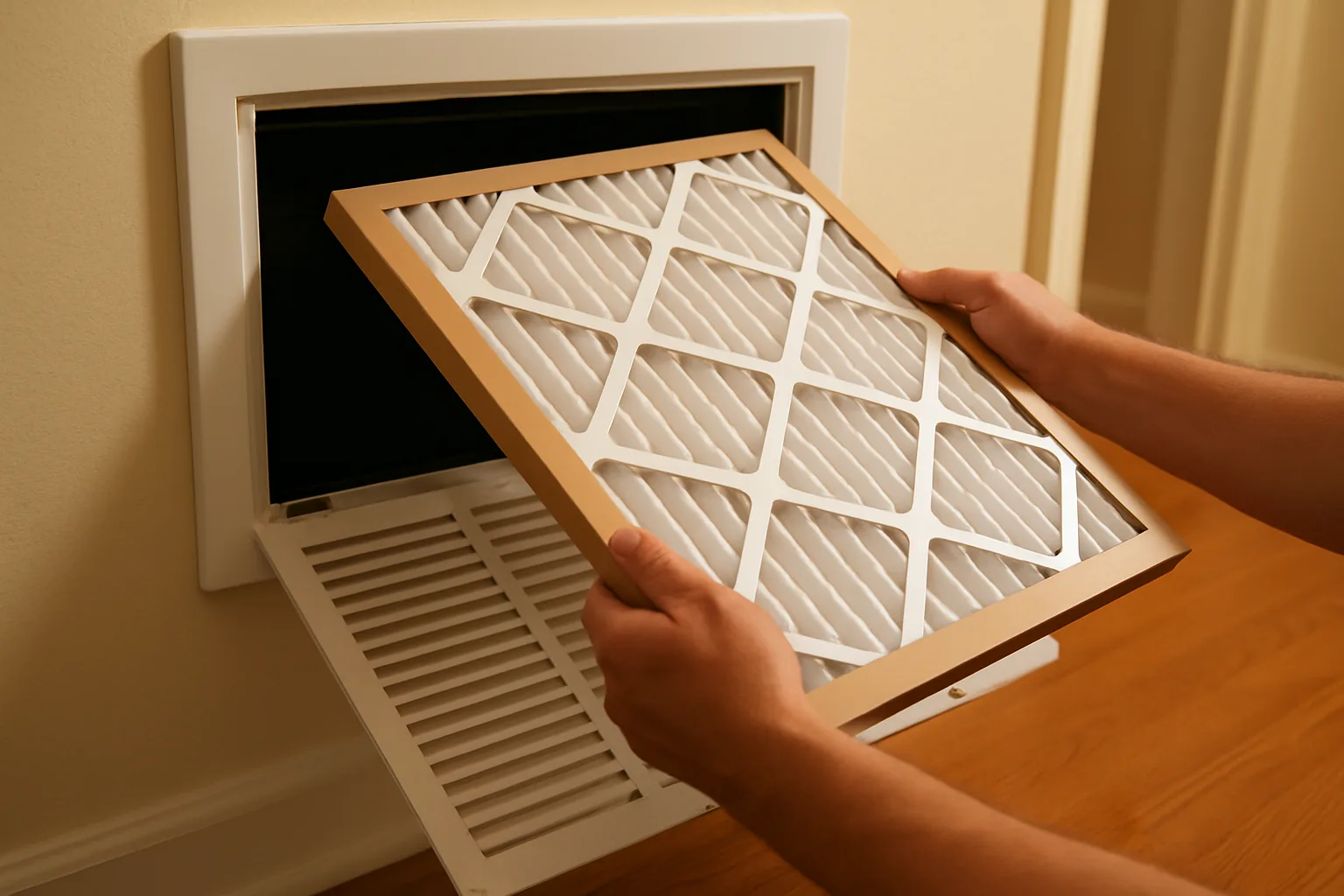
Install a fresh filter of the correct size, with the airflow arrow pointing toward the blower. The Department of Energy suggests checking filters monthly during heavy-use months and replacing them at least quarterly. Resist buying the highest MERV rating on the shelf: MERV 8 to 13 suits most residential systems, and a filter denser than the system was designed for raises static pressure and starves airflow, causing the exact comfort problems people buy it to solve.
Then flush the condensate drain. An air conditioner pulls gallons of water out of the air on a humid day, and that line has been sitting damp and idle since fall, growing biofilm. Clear it, confirm the pan is dry, and check the float switch. A plugged condensate line is one of the most common no-cool calls of the summer, and it shows up either as water on the floor or as a system that shuts itself off for no obvious reason. The indoor evaporator coil is the other half of the equation, and it lives inside a sealed plenum. That one belongs to a technician.

The Test Run, and Why the Weather Matters
Wait until the outdoor temperature has been at or above roughly 60 degrees for a day. Below that, refrigerant pressures do not settle where they should, so the test tells you nothing useful, and running the compressor in genuinely cold weather can damage it.
Set the thermostat to COOL, drop the setpoint about five degrees below room temperature, and let it run 15 to 20 minutes. You want four things: the outdoor fan spinning with the compressor running, air at the registers that is clearly cold rather than merely moving, no burning smell past the first minute of dust, and no new rattle, screech, or buzz.
For an actual number, hold a thermometer in a supply register and another at the return grille. A healthy system produces a temperature split of about 16 to 22 degrees. Much under 14 or much over 25 is worth a service call.
One sound is worth knowing specifically. If the outdoor fan spins but the compressor only hums for a few seconds and then clicks off, a failed run capacitor is the likeliest cause, and it is one of the cheapest common repairs in the trade. If the system runs and simply will not cool the house, our walkthrough for an AC that runs without cooling takes the rest of the list in order.
Surviving the Shoulder-Season Thermostat Fight
Spring is the season of heat at 6 a.m. and air conditioning at 3 p.m. Flipping modes is not going to destroy anything, but done carelessly it wastes energy and adds cycles to the most expensive component you own.
Two rules cover most of it. Never switch from heat to cool and back inside five minutes, because a compressor needs time to equalize pressure before restarting. Most modern thermostats enforce that delay for you; older mechanical ones will happily let you do damage. Second, widen the gap. If your thermostat has an auto changeover mode, give it a deadband of at least three or four degrees, something like heat at 68 and cool at 76, so the house floats through the mild middle instead of the two modes dueling all afternoon.
The cheap moves are the better ones during this stretch. Open the windows on a mild dry day. Run ceiling fans, remembering that fans make people feel cooler and do nothing to a room’s temperature, so turn them off when you leave. Use a space heater in one chilly room rather than firing the whole furnace. A programmable thermostat cuts heating and cooling costs by roughly 10 percent a year when the schedule is set thoughtfully, and our smart thermostat guide covers which models handle automatic changeover well. Once the weather commits, our summer setpoint guide has the comfort and cost math.
Where DIY Ends
Filters, coil rinsing, clearance, the drain line, thermostat batteries, and the test run are all homeowner work. Past that, refrigerant is the hard line: anyone handling it is legally required to hold EPA Section 608 certification, and the recharge cans sold online do not change that. A system low on refrigerant has a leak by definition, since refrigerant is not consumed, so topping it off without finding the leak just vents it again in a few months. Capacitors are the other one people underestimate. They hold a dangerous charge even after the power is off and have to be discharged properly. Contactors, control boards, and anything gas-related round out the list.
Book the Pro Visit Before Everyone Else Does
ENERGY STAR frames the annual tune-up the way you would a car’s yearly service: it will not make the system new, but it makes the catastrophic surprise much less likely. A real spring tune-up generally runs $75 to $200, and maintenance plans in the $150 to $350 a year range usually bundle both seasonal visits with priority scheduling and a parts discount.
Book it in March or April. By the first heat wave you are queued behind emergency calls, often at overtime rates, and our breakdown of HVAC service costs shows how fast that premium adds up. A legitimate visit includes refrigerant pressure readings with superheat and subcooling, amp draw on the compressor and blower motors, a capacitor microfarad test, contactor inspection, coil cleaning, condensate service, and a static pressure reading. A twenty-minute stop that ends in a replacement quote is not a tune-up. If you are still choosing a company, our guide to vetting an HVAC contractor covers the credentials to verify first, and the annual furnace inspection belongs on the other end of the calendar in the fall.
The Bottom Line
The spring switchover is not annual maintenance in miniature. It is a specific handoff with its own failure modes: a humidifier left open, a condenser buried in leaves with a mouse nest in it, a compressor started cold after six months on a dead crankcase heater, a drain line full of biofilm, and a capacitor that quietly died in February. None of those announce themselves until the house is 88 degrees and the earliest appointment is Thursday. Run the cooling side once on a mild day, while it is still just a chore.
Further reading (sources)
- WFTV on handing the season off from heating to cooling
- U.S. Department of Energy for what routine air conditioner maintenance actually covers
- ENERGY STAR with the case for a pre-season professional check-up
- U.S. Environmental Protection Agency covering who is legally allowed to handle refrigerant
- U.S. Department of Energy and how to set a thermostat without fighting the shoulder season