Your Street Is Hotter Than the Forecast: Cooling a House in an Urban Heat Island
Published on October 3, 2026

The forecast says 94. By late afternoon the thermometer on your back porch reads 99, and at midnight, with the weather app showing “clear, 78,” the vents are still blowing and the upstairs is still above 80. Nothing is broken. You live in an urban heat island, and the numbers you are given, by the forecast and possibly by the contractor who sized your air conditioner, describe somewhere else.
Most writing about heat islands is aimed at city planners. This guide is for the homeowner whose system looks right on paper and still loses ground every July: why the gap exists, why it is worst at night, and what to change in the equipment, the roof and the attic to design around a penalty that is not going away.
Why Your Block Runs Hotter Than the Forecast
Start with where the official number comes from. The National Weather Service’s automated network has around 950 stations, primarily located at airports, and their readings feed public forecasts and the climate record. The design temperature in your contractor’s load calculation comes from the same kind of long-term station record: Houston’s is the airport’s.
An airport is a big open space. Your block may not be. EPA names four causes that make built-up areas hotter: roofing and paving that absorb the sun’s energy and give it back as heat, buildings packed tightly enough to block the wind and hold that heat in, too little vegetation to cool the air with shade and evaporation, and waste heat from vehicles, buildings and, awkwardly, air conditioners.
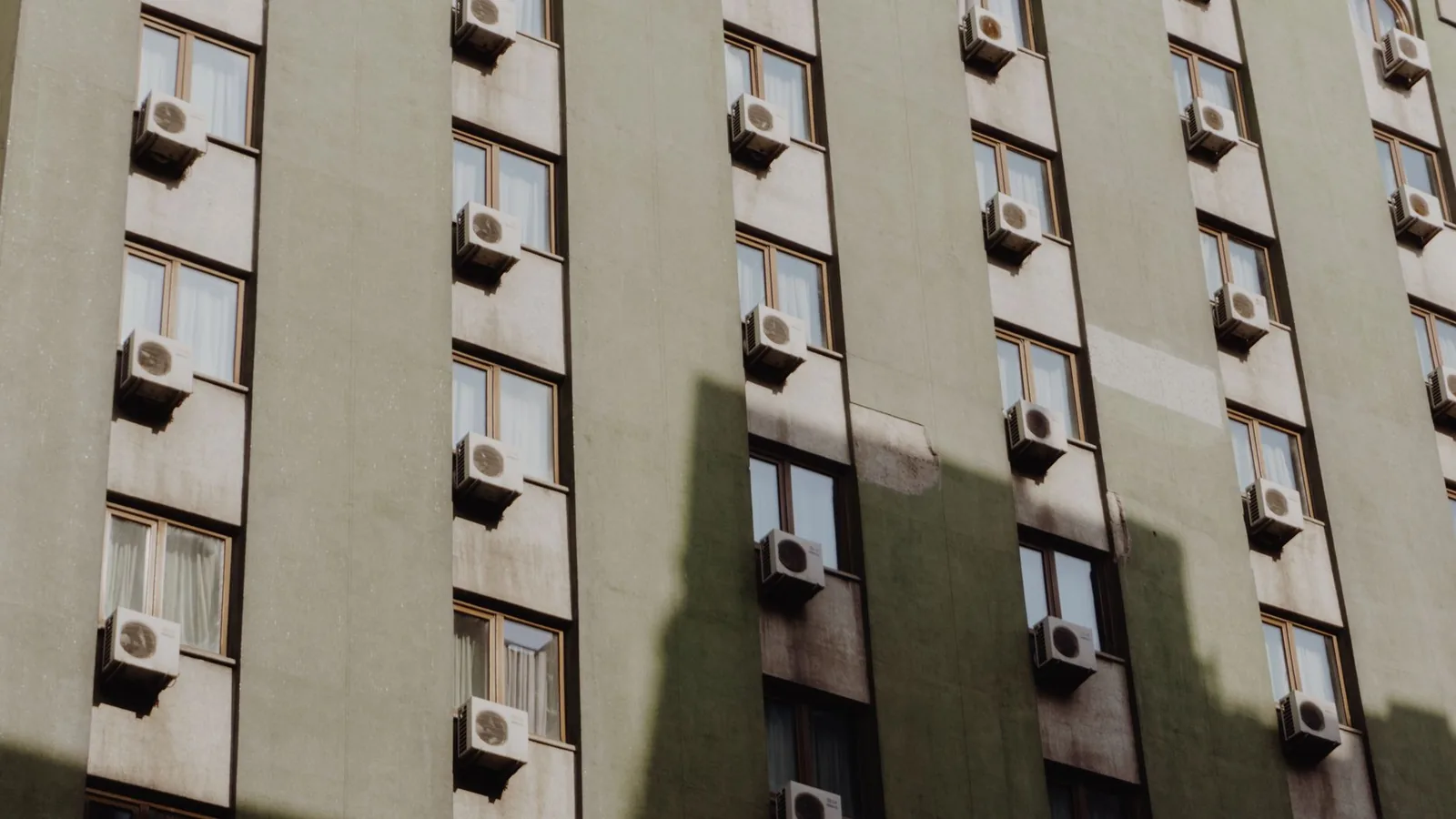
Averaged across U.S. studies, EPA puts the gap at about 1 to 7 degrees during the day and 2 to 5 degrees at night, compared with outlying areas. Averages hide the hot spots. A 2024 Climate Central analysis of 65 large cities estimated how many degrees the built environment adds, block group by block group, and found 68 percent of the roughly 50 million residents covered living where that boost is 8 degrees or more, with the average per resident ranging from 7.4 degrees in Phoenix to 9.7 in New York City. NOAA-supported volunteer campaigns, which drive temperature sensors through neighborhoods on a hot day, had mapped more than 70 communities by 2023 and find heat islands running up to 20 degrees hotter than nearby neighborhoods with more trees.
None of that describes your street. The airport is not automatically the cool spot, and a shaded block beside a park can run below the official number. The only way to know is to measure.
The Night Is Where the Penalty Lands
The daytime gap gets the headlines, but the nighttime gap does more damage to a cooling system. EPA explains that heat islands “build throughout the day and become more pronounced after sunset” as brick, concrete and asphalt slowly release the heat they stored.
That matters because of how air conditioners are sized. Equipment sized by the standard method keeps up on a hot afternoon and is expected to fall slightly behind on the very hottest ones. The evening rescues it: the outdoor temperature drops, the load drops with it, and the system gets ahead again. Overnight the house itself (drywall, framing, furniture, the slab) gives up the heat it soaked up, and the next day starts from a cool house.
In a heat island that recovery shrinks or disappears. At 84 degrees outside at midnight instead of 72, the system may run all night just to hold the setpoint, the building never sheds its stored heat, and the next afternoon starts with that heat already inside. Over several days of a heat wave the indoor temperature creeps upward while the compressor runs nearly nonstop. It looks like an undersized or failing unit. Often it is a correctly sized unit that never gets its night off, and the household pays in sleep as well as electricity: a 2024 systematic review found higher outdoor and indoor temperatures generally associated with worse sleep, with stronger effects in vulnerable people.
The equipment also works less well in the heat it is fighting, because an air conditioner dumps its heat into the outdoor air. In a 1995 laboratory study of eight residential systems, Texas A&M researchers measured capacity falling by about half a percent, and efficiency by a bit over 1 percent, for every degree the outdoor air warmed. A condenser breathing 100 degree air instead of 90 delivers roughly 5 percent less cooling and uses more than 10 percent more electricity for each unit of cooling it does deliver.
Measure Your Own Heat Penalty First
Before anyone touches the equipment, find out what your site actually does. You need an inexpensive outdoor temperature logger that records to a phone app, and two or three weeks of summer. Site it the way the National Weather Service recommends, as nearly as a city lot allows: 4.5 to 6 feet above the ground, shielded from the sun, with air moving freely around it, over grass rather than pavement, and well away from the hot air blowing out of the condenser.
Then compare your readings with the airport’s. The overnight lows matter most, because they show how much recovery time your system really gets. A block that runs 3 degrees warmer than the airport at 4 p.m. and 7 degrees warmer at 4 a.m. has a night problem more than a day problem.
For a second opinion, check whether your city ran one of the NOAA mapping campaigns, and look up your neighborhood on Climate Central’s interactive maps. And unless you have added an outdoor sensor, the “outdoor temperature” on your smart thermostat usually comes from an online weather service, not from your house.
Sizing for Your Site, Not the Airport
If the system is losing ground now, start with how old it is and what type it is. A 15-year-old single-stage unit with a matted condenser coil or a marginal refrigerant charge loses even more capacity in the heat than a clean, correctly charged one. That is a service call, not a sizing problem, and any work on the refrigerant side legally requires an EPA 608 certified technician.
At replacement time, the load calculation is where the heat island either gets handled or gets fudged. ACCA’s Manual J, the industry standard, bases its outdoor design conditions on ASHRAE’s 1 percent cooling design temperature, which a location exceeds for only about 88 hours in a typical year. At the Houston airport station it is 94 degrees. In a heat island your house sees those conditions more often, and the nights do not let up.
The tempting fix is to raise the design temperature to whatever you think your block hits. Contractors override the published values all the time, and it is the wrong move. A RESNET training session on Manual J notes that the procedure already carries a safety margin and that designing to the hottest temperature you have ever seen compromises the system during all the remaining hours. ENERGY STAR caps the design temperature for certified new homes at a published limit for each county. A single-stage unit sized to a fantasy afternoon short cycles all spring and leaves the house cold and clammy, as our central air conditioner buying guide explains. Do this instead.
Make the load calculation describe your house. Much of what makes a city house hot is in the house and on the lot: a dark roof over an attic, ducts running through that attic, west-facing glass with no tree to shade it. Those are Manual J inputs, and they should be measured and entered honestly rather than left at defaults.
Ask what the unit delivers when it is hot. The tonnage on a quote is a rating-point number. ENERGY STAR’s design report requires the designer to list the system’s capacity at the home’s design conditions, taken from the manufacturer’s expanded performance data, and any bidder can show you that table. Read the rows above 95 degrees, not just the headline.
Read EER2 as well as SEER2. SEER2 averages efficiency over a cooling season that is mostly mild weather. EER2 is the efficiency at 95 degrees outdoors. Federal rules for the Southwest (Arizona, California, Nevada and New Mexico) require both, and the way they are written is telling: a split air conditioner smaller than 3.75 tons and rated below 15.2 SEER2 needs at least 11.7 EER2, while one rated 15.2 or higher needs only 9.8. A high seasonal number does not guarantee strong performance on the hottest afternoon, so compare both.
Choose capacity that can throttle. ENERGY STAR recommends a single-speed system at 90 to 115 percent of the calculated cooling load and caps it at 130, but allows two-speed equipment up to 140 percent and variable-speed up to 160, because equipment that can slow down short cycles far less on mild days. For a heat island house that headroom is the honest answer: capacity for the night that never cools, without the humidity penalty the rest of the summer. In the Texas A&M tests, the two-speed units also lost the least capacity as the air heated up.
Get several quotes and ask each bidder for the Manual J summary and the hot-weather capacity figures, because pricing and assumptions vary widely.
Cool the Roof
On a summer afternoon the roof is the hottest surface on the house. EPA explains that solar reflectance, the share of sunlight a surface bounces away, matters most, while thermal emittance, how readily the surface sheds the heat it does absorb, also plays a role.
The best residential data comes from Florida. In the summer of 2000 the Florida Solar Energy Center (FSEC) compared side-by-side Fort Myers homes that were identical except for their roofs. The highly reflective white roofs (metal and two styles of tile) cut annual cooling energy by 18 to 26 percent and peak demand by 28 to 35 percent compared with standard dark shingles. White shingles saved only 3 to 5 percent. They looked white, but they reflected just 24 percent of the sunlight, against more than 60 percent for the true white roofs. Judge a roof by its measured reflectance, not its color.
An earlier FSEC project whitened the roofs of nine occupied homes in mid-summer and measured air conditioning savings averaging 19 percent, ranging from 2 to 43 percent, depending on the ceiling insulation, where the ducts ran and how the air conditioner was sized. EPA’s broader summary is that a cool roof can cut peak cooling demand in an air-conditioned home by 11 to 27 percent.
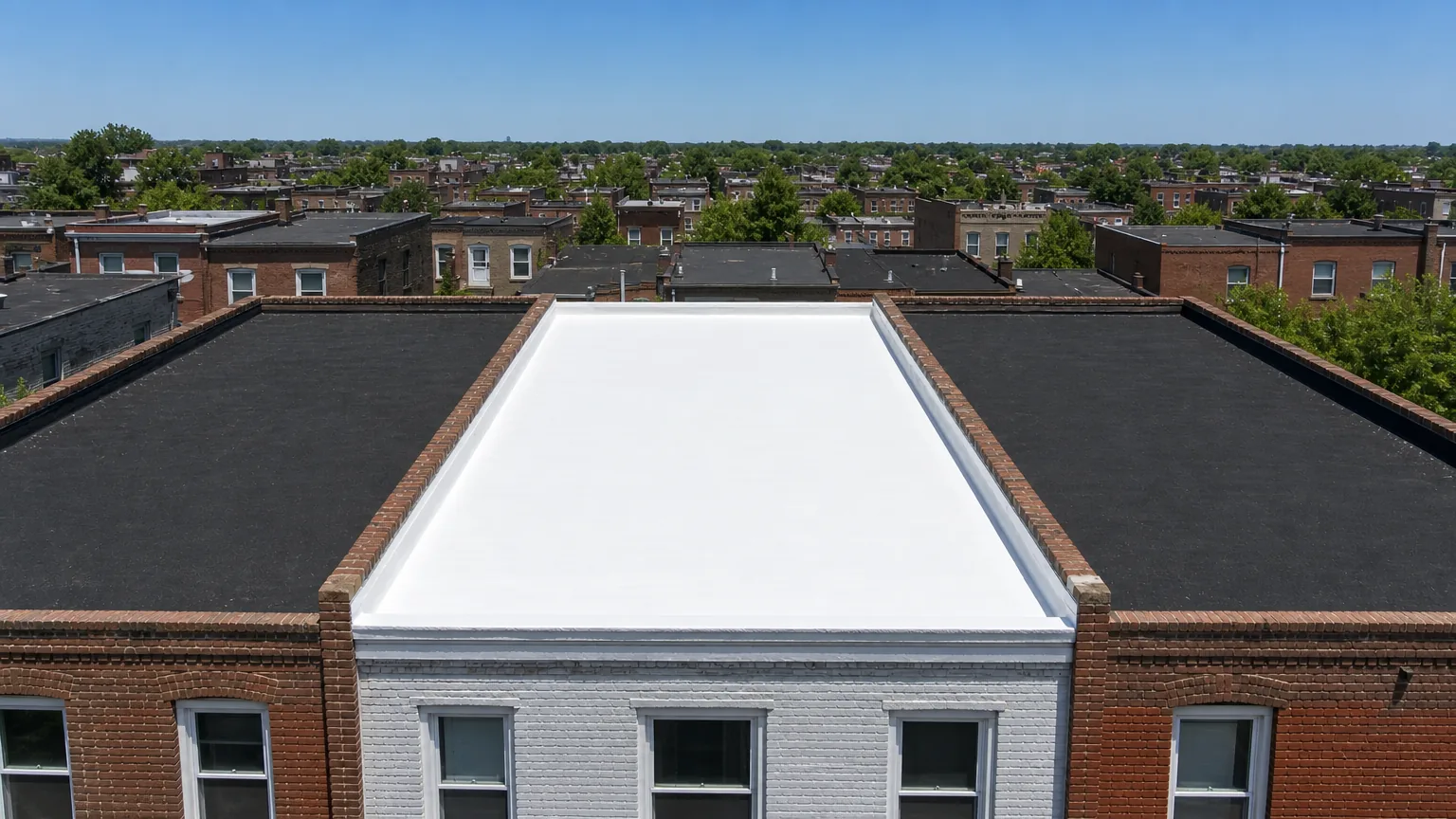
Flat and low-slope roofs, common on rowhouses, triple-deckers and many older city homes, are the cheapest win. A light-colored liquid-applied coating or a reflective single-ply membrane goes over the existing roof, and the top-floor rooms directly beneath feel it most. Pitched roofs have cool versions of the usual materials: asphalt shingles with cool-colored granules, light tile, and metal with reflective paint. Products made with infrared-reflective pigments tend to cost more, so the cheap moment to choose one is when the roof is due anyway.
Look up any product in the Cool Roof Rating Council’s directory, which lists initial and three-year aged reflectance and emittance, and go by the aged number. At FSEC’s roof test facility, a white elastomeric coating’s reflectance fell from 0.71 to 0.59 after about a year outdoors, mostly from algae. If you heat through a real winter, the small loss of free solar heat is a trade-off EPA says summer savings typically offset.
The Attic Is Where Roof Heat Becomes Your Load
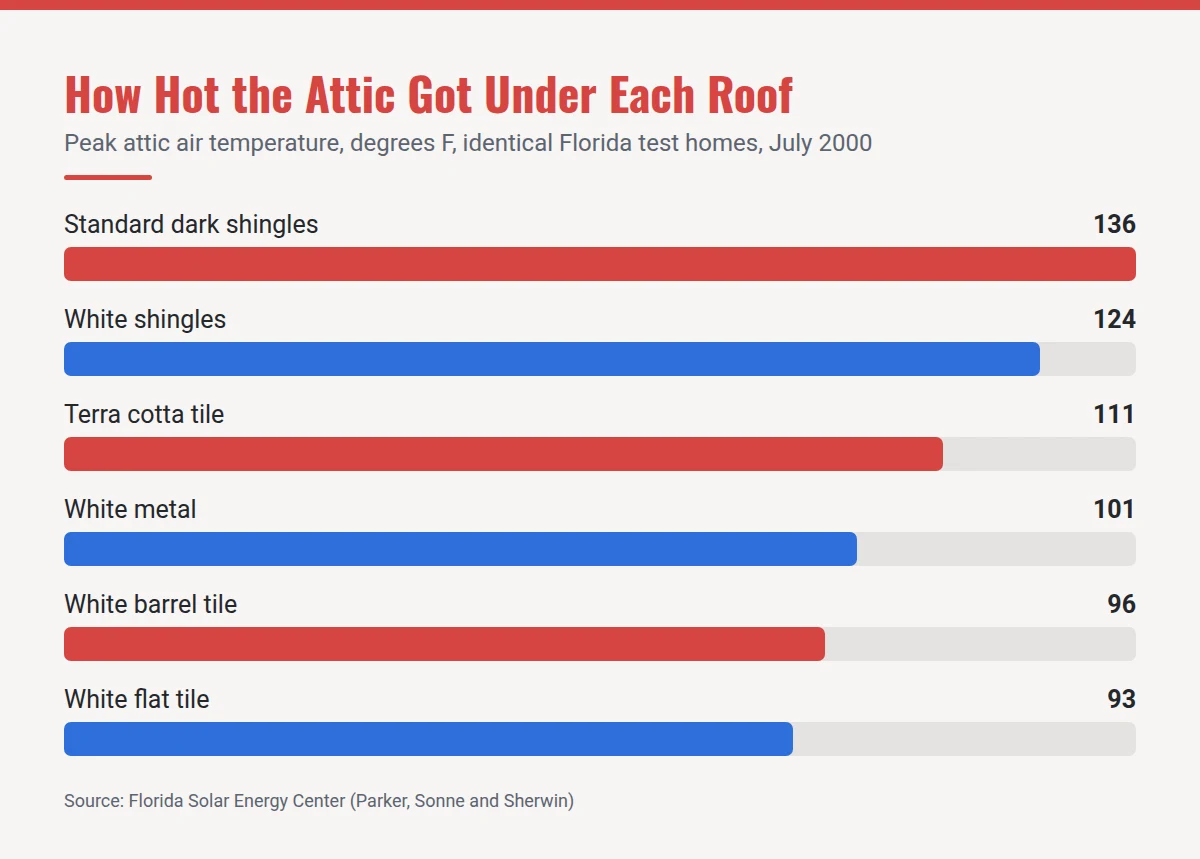
Under a pitched roof, the sun’s heat reaches you through the attic, and that is also where many houses run their ducts. In the Fort Myers test homes, the attic under dark shingles peaked near 136 degrees during the month of measurements, against roughly 93 to 101 degrees under the white tile and metal roofs. The same researchers cite earlier work showing that ducts and an air handler in a hot attic can cost a cooling system up to 30 percent of its capacity at peak. Stack a dark roof, attic ducts and a heat island on one house and the system is fighting three versions of the same problem.
Warm nights make it worse, because an attic cools off after sunset only as far as the night air allows. The fix list is the one in our envelope guide, and the order matters. Seal the attic floor so attic air cannot leak into the rooms below, bring the insulation up to depth, then seal and insulate the ducts or get them out of the attic entirely, as our ductwork guide explains. The roof surface usually comes last, at the next re-roof, unless you have a flat roof that can be coated now.
Night Flushing Needs a Night That Cools Off
Opening the windows at night or running a whole-house fan is the classic cheap way to cool a house, and it only works when the outdoor air is cooler than the indoor air. The Department of Energy’s Building America guidance says whole-house fans do best where cooling-season nights fall below about 67 degrees and the daily high and low sit more than about 25 degrees apart. A heat island attacks both conditions: it holds the nights up and squeezes the swing. Our whole-house fan guide covers where the method shines. In a dense neighborhood, street noise, security and outdoor air quality also argue against wide-open windows at 2 a.m.
So go by your logger rather than habit. Flush only when the outdoor air is several degrees cooler than inside and not muggy, and close up before the morning warms. On nights that never cool enough, keep the house shut and let the air conditioner run steadily.
Time the cooling to the cooler hours, too. Because efficiency falls as the outdoor air heats up, early morning is the most efficient time to cool. Pre-cool a degree or two ahead of the afternoon and keep daytime setbacks shallow, since a system clawing back 8 degrees at 6 p.m. into an evening that never cools may not finish by bedtime. Our summer thermostat guide covers setpoints and schedules.
Who Pays for Shade Trees and Cool Roofs
Trees are the one fix that cools both your house and your block: they shade walls and roofs, and they cool the air as water evaporates from their leaves. Lawrence Berkeley National Laboratory’s Heat Island Group estimated that counting the cooling of the wider community raises the energy savings from shade trees by at least 25 percent over the direct effect on each building. Plant for the afternoon sun on the west and southwest, and be patient.
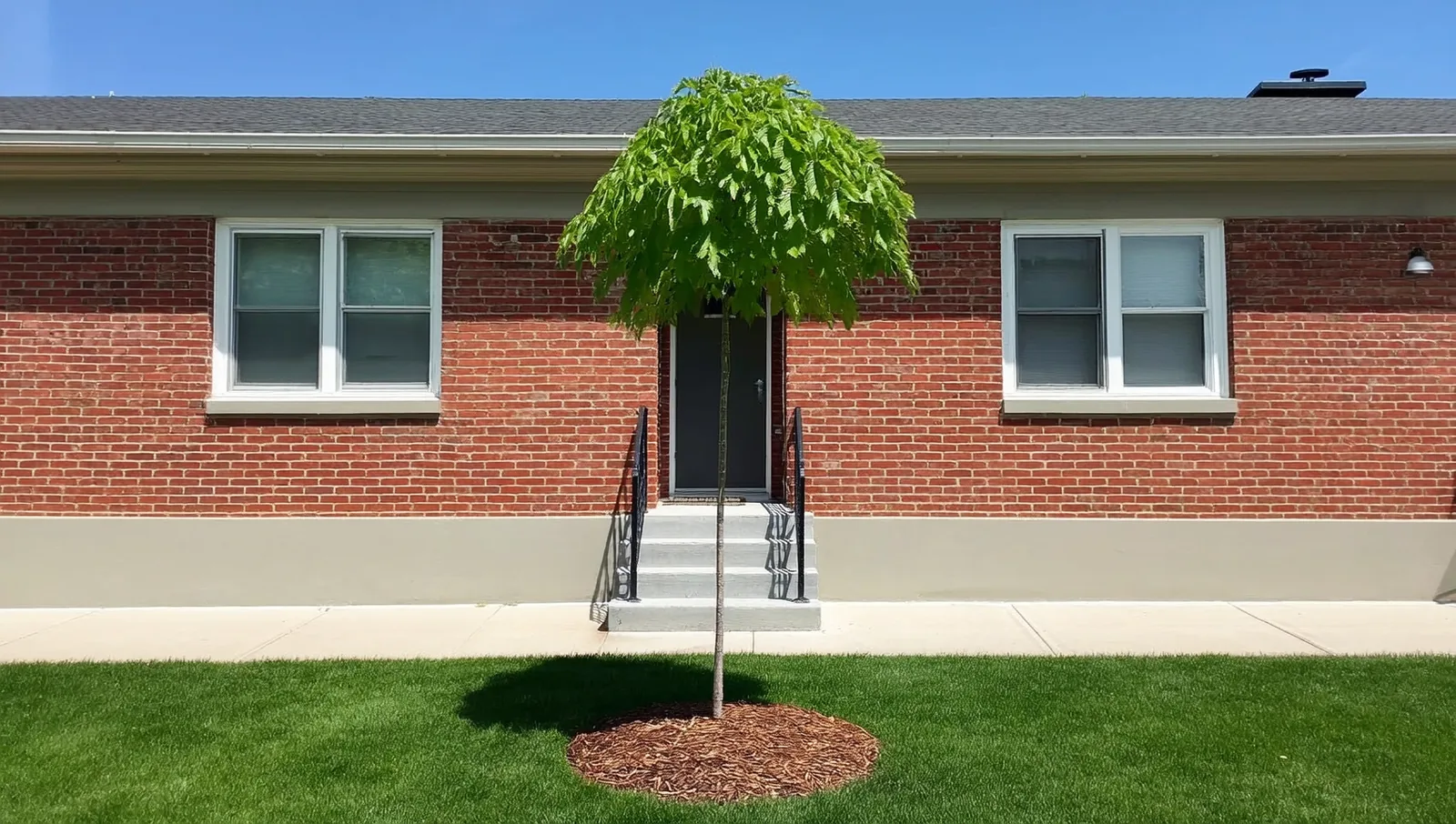
Some utilities and cities give trees away. In Sacramento, the municipal utility SMUD and the Sacramento Tree Foundation have planted more than 630,000 shade trees since 1990, and customers can get up to 10 free trees, with a community forester helping decide where they go. Ask your own utility and your city’s forestry office what runs locally.
Cool roof money is patchier. A Phoenix-area utility, SRP, rebates rated cool roof products on residential low-slope roofs (a pitch of 2:12 or less) that meet its reflectance thresholds, including products that homeowners install themselves. New York City’s CoolRoofs program coats suitable flat roofs for free on affordable housing, nonprofit buildings and some co-ops, and at low cost for other owners, who buy the coating while the program supplies the labor.
The federal efficiency tax credits ended with 2025, so the money that remains is local: your electric utility, your city’s sustainability or forestry office and your state energy office. Check before you re-roof, because programs usually require a rated product and specific paperwork, and some set deadlines that run from the install date.
The Bottom Line
A heat island is a permanent local temperature penalty, and the hardest part arrives after dark, when your system expects a break it no longer gets. Measure what your block really does, especially the overnight lows. Fix the attic and the ducts first, choose a roof by its aged reflectance, and plant shade on the west. When new equipment comes up, insist on an honest load calculation, ask for capacity at hot conditions, compare EER2 as well as SEER2, and buy capacity that can throttle down rather than a bigger single-stage unit. That combination keeps up with the night without punishing you the rest of the summer.
Further reading (sources)
- U.S. EPA on what causes heat islands and why they intensify after sunset
- U.S. EPA explaining how cool roofs work and which products suit each roof type
- Climate Central with its 2024 urban heat island index for 65 U.S. cities
- NOAA on volunteer heat mapping campaigns and how much hotter heat islands run
- National Weather Service describing the ASOS network and where its stations sit
- National Weather Service for siting a thermometer so it reads true
- Chevance and colleagues with a systematic review of heat and sleep
- Texas A&M researchers, in a report hosted by Proctor Engineering, measuring how residential air conditioners lose capacity and efficiency in high heat
- Green Building Advisor on design temperatures and why overriding them oversizes systems
- RESNET and its training session on the basics of Manual J
- ENERGY STAR for the design temperature limits and sizing rules behind certified homes
- Electronic Code of Federal Regulations listing federal SEER2 and EER2 minimums by region
- Florida Solar Energy Center comparing six roofing systems on identical Fort Myers test homes
- Florida Solar Energy Center with measured savings from whitening the roofs of occupied homes
- Cool Roof Rating Council and its directory of rated roof products
- DOE Building America Solution Center on the night conditions a whole-house fan needs
- Akbari, Lawrence Berkeley National Laboratory, estimating how shade trees cut building energy use
- SMUD on its free shade tree program
- SRP listing the terms of its residential cool roof rebate
- NYC Small Business Services on which buildings qualify for NYC CoolRoofs